Frankenstein 200 in London
- Camera
- Pentax KM
- Lab
- Alien Film Lab by B&C Camera
- Scanner
- Noritsu HS1800
In the fall of 2025, I traveled to London on a business trip. I work for the Ultimate Fighting Championship (UFC) in Las Vegas, and the job sends me overseas often, shooting commercials with high-profile MMA athletes. On these trips I always bring my film camera, and I spend whatever free time I have exploring the fighter’s hometown and nearby cities or regions if I’m lucky.
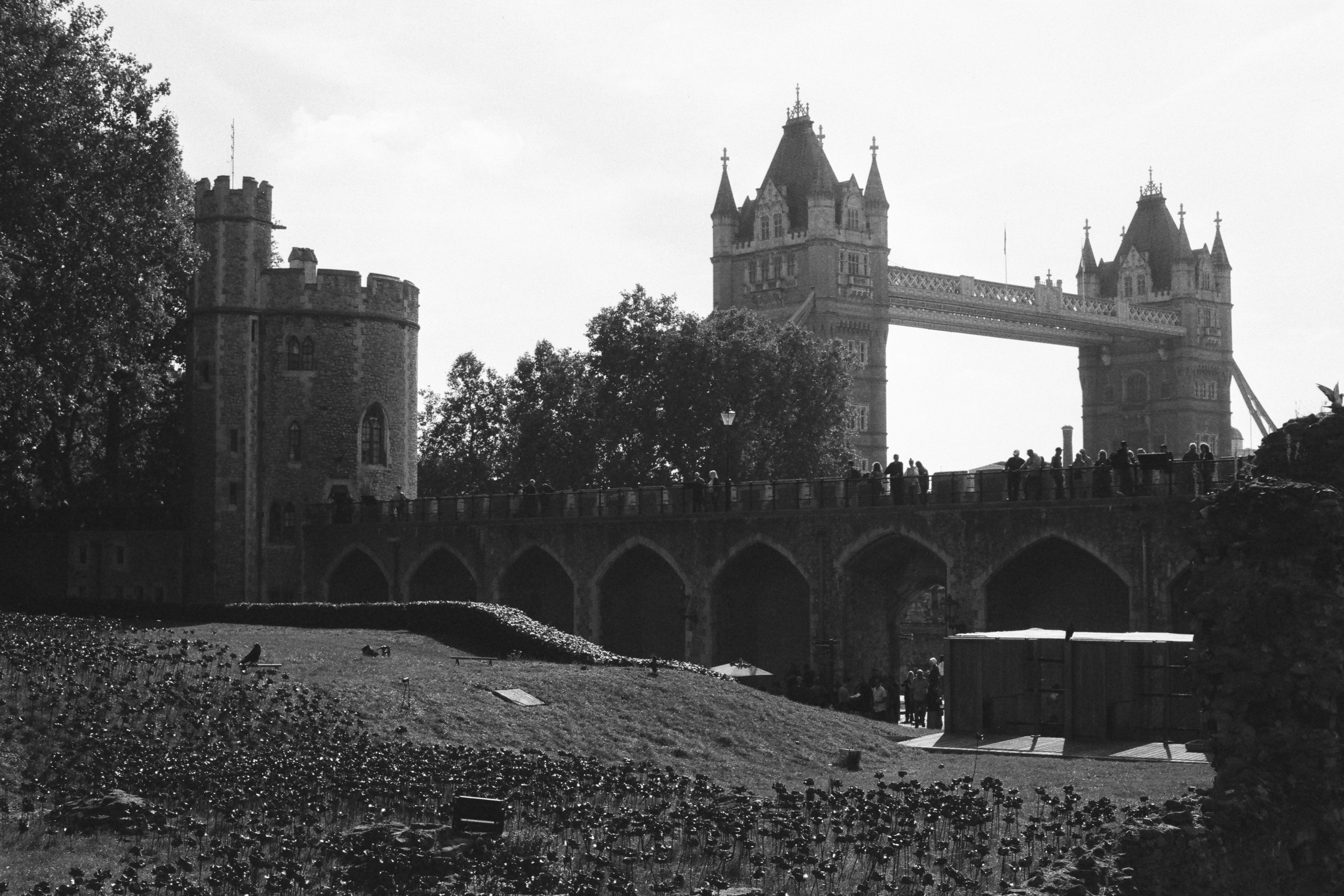
London was only the first stop; we were connecting on to Liverpool the next day. That left us one day in the city, and we spent it at the Tower of London. There’s a particular pleasure in shooting a city like this: for all its modern life, the history sits right there on the surface, and everything I point my camera at has a story, whether I know it or not. Which brings me to the film stock I brought: Film Photography Project’s Frankenstein 200.
How I ended up with Frankenstein 200 is a funny story. I was bantering with the very friendly staff at B&C Camera in Las Vegas, and I asked them to help me pick a black-and-white film for an overseas trip. I hadn’t shot black and white since college, and I figured it would suit England as the season turned colder and drearier. As they weighed their options, both of them asked me at once: “Where are you going?” “I’m shooting old castles in Wales,” I said. They looked at each other, shock and excitement on both faces, and shouted, in unison, “Mummy!”
These guys were film geeks in the best way. They scrambled to find me this “Mummy” stock, which I was only half-convinced was a real thing. I asked what it was, exactly, and the salesman handed me a roll and said, with utter joy, “It makes everything you shoot look like a horror movie!” True or not, I was sold, and I promised to send the staff my results when I got back.
Before I paid, though, I noticed Mummy 400 wasn’t the only stock behind the counter. There was Dracula 64, Wolfman 100, and Frankenstein 200. I grabbed a Frankenstein too, for the sake of variety. When I got to London I decided to shoot it first, saving the faster Mummy film for the castles in Wales, where I figured I’d meet more variable, erratic light moving in and out of those ancient structures. What I didn’t expect was to run straight into low light and high contrast the moment I started shooting in London.
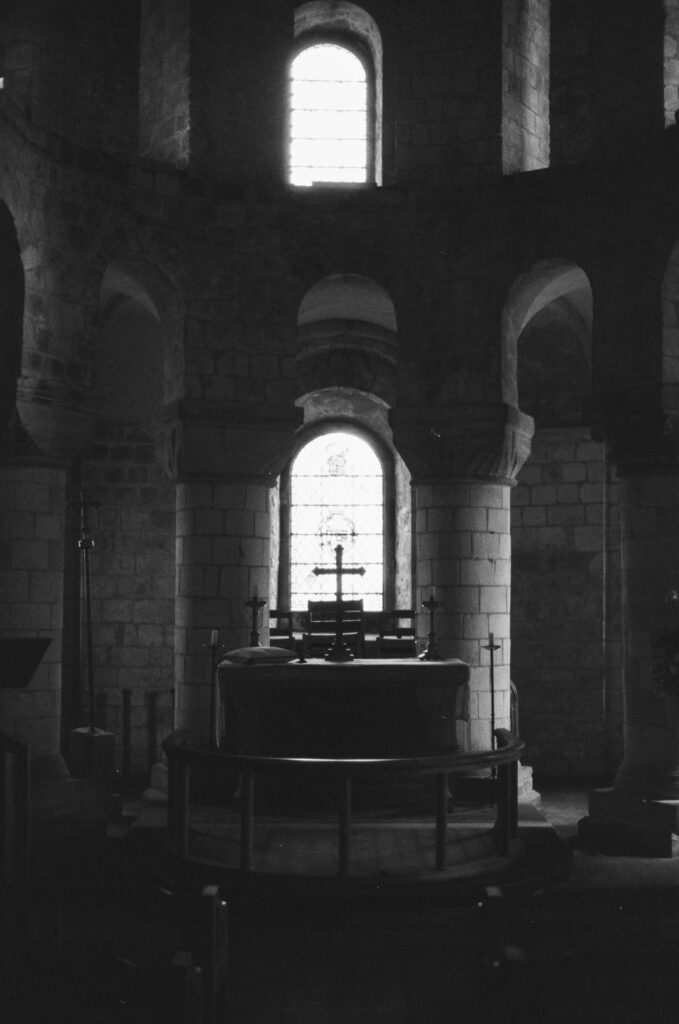
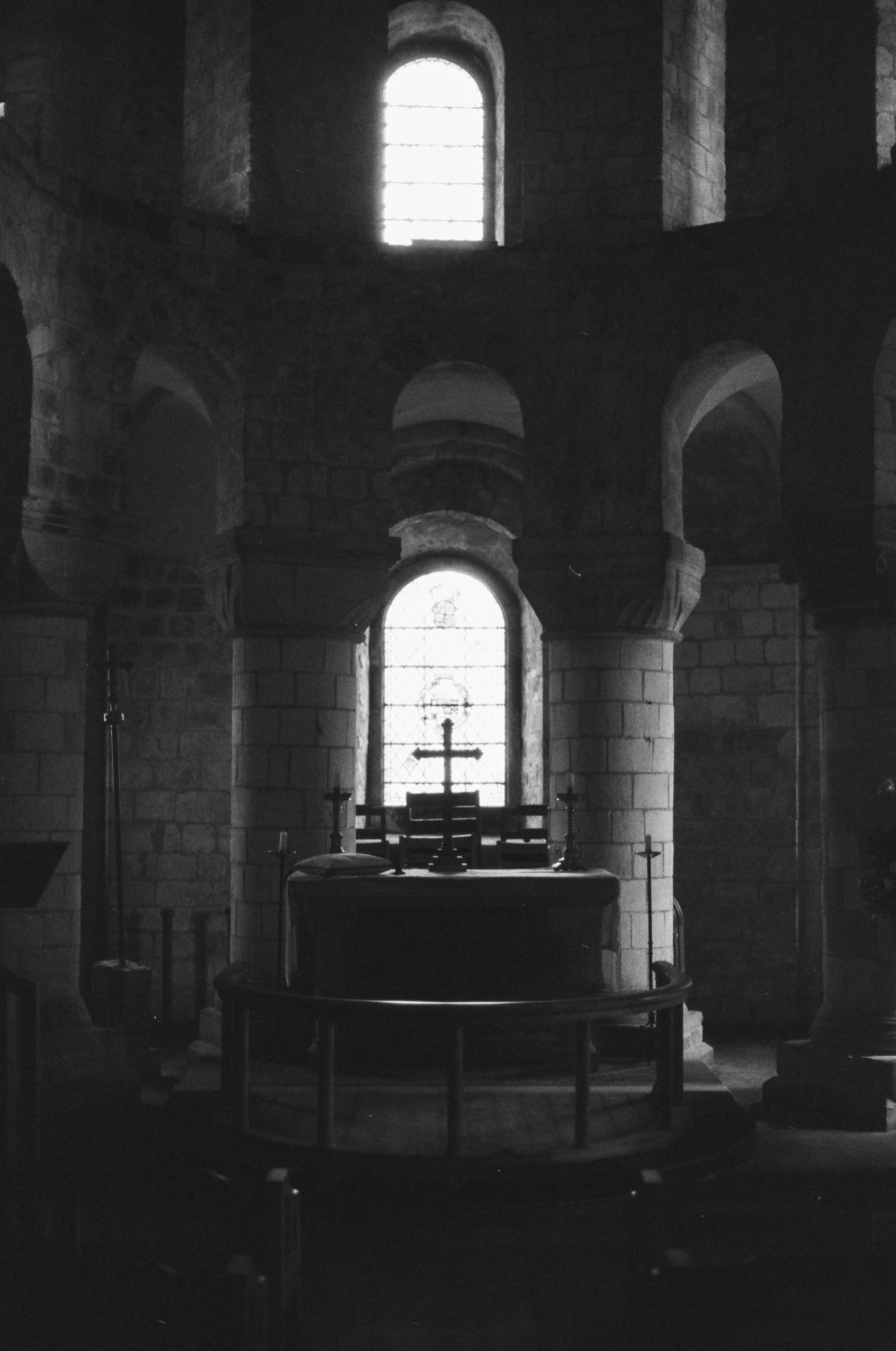
My colleague who accompanied me on this trip is a history buff, and he led us through every nook and cranny of the Tower. At one point we ended up in a small church, where a backlit cross glowed in the quiet room. Metering it, I realized the shutter had to drop quite slow to let in enough light at ISO 200, and I braced myself against the blur. I didn’t beat it entirely, as you’ll see in this frame, but to my eye the softness is lovely. I’d also opened up to f/1.4, the widest my Pentax 50mm goes and a notoriously soft aperture on this lens. But the shot came out beautifully, the cross shining while the frame held its quiet, dream-like mood.
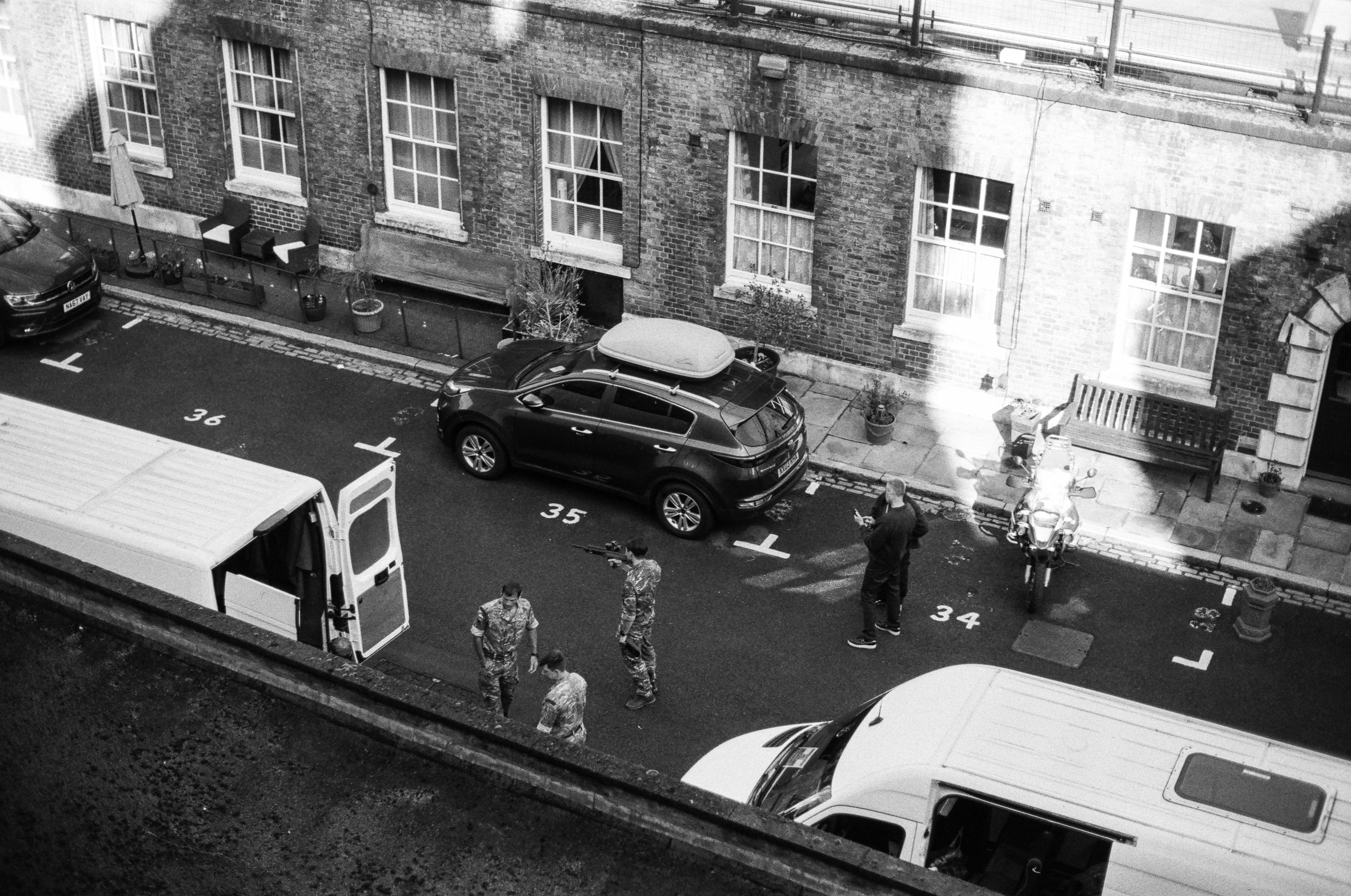
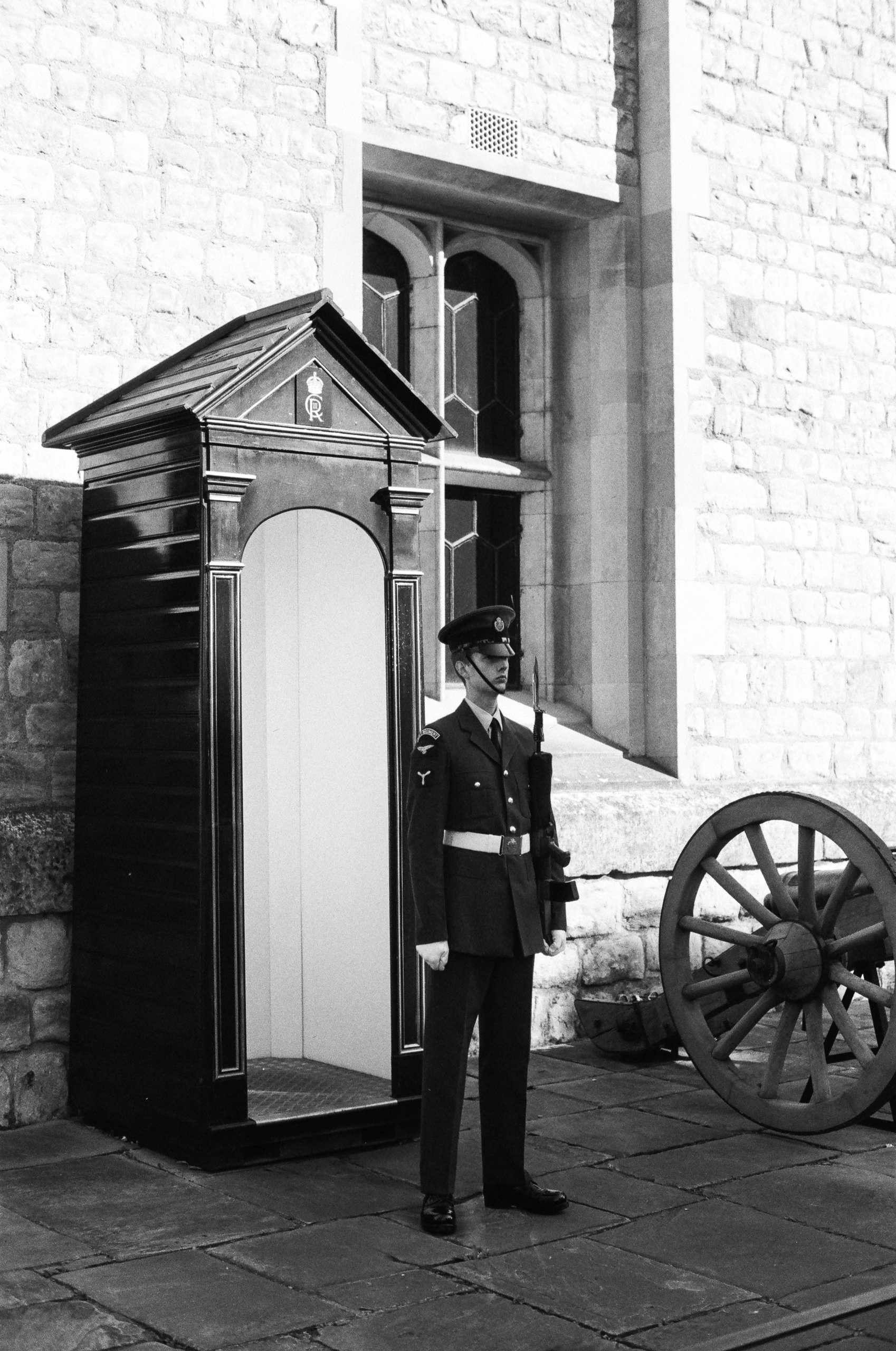
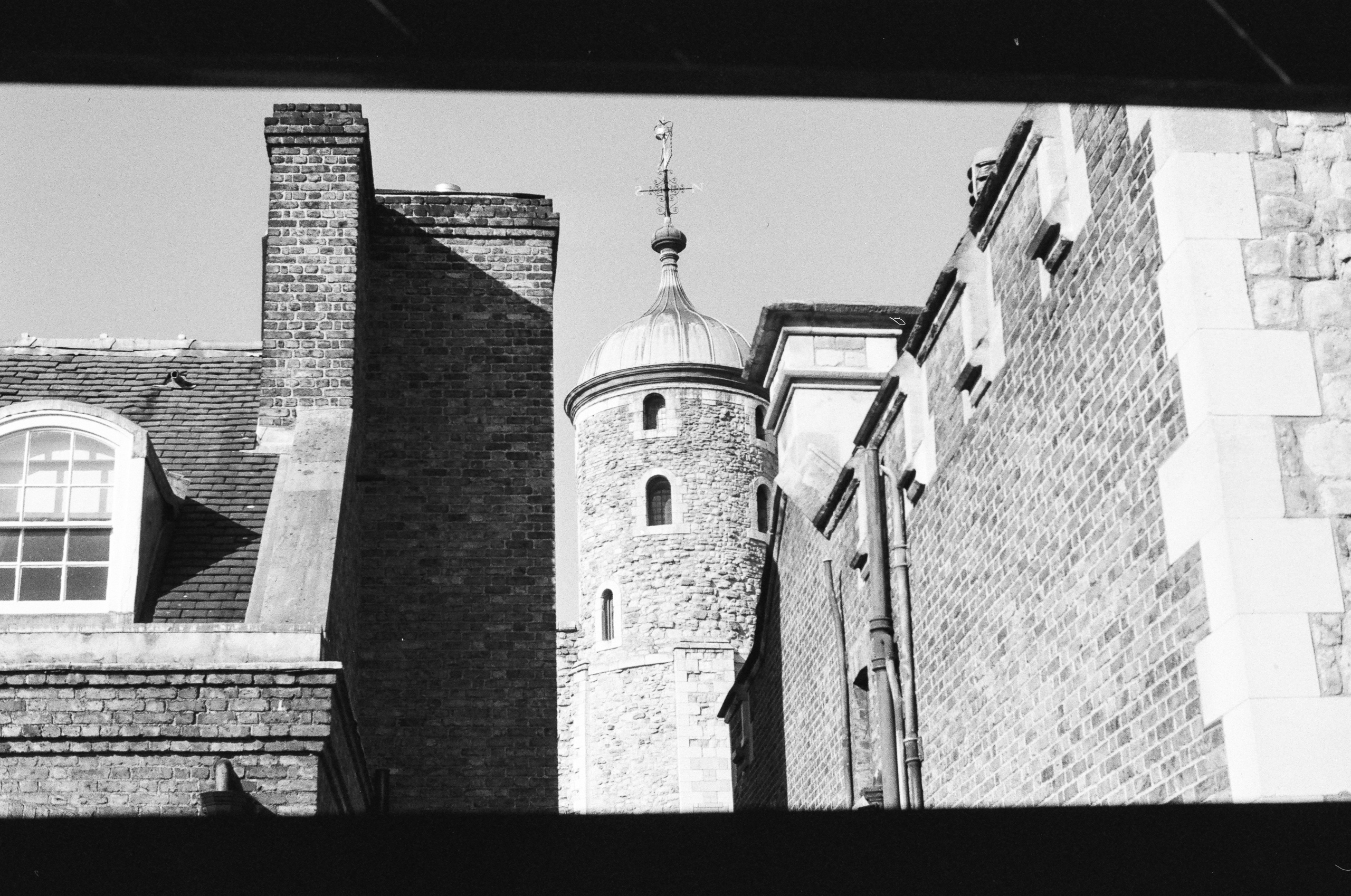
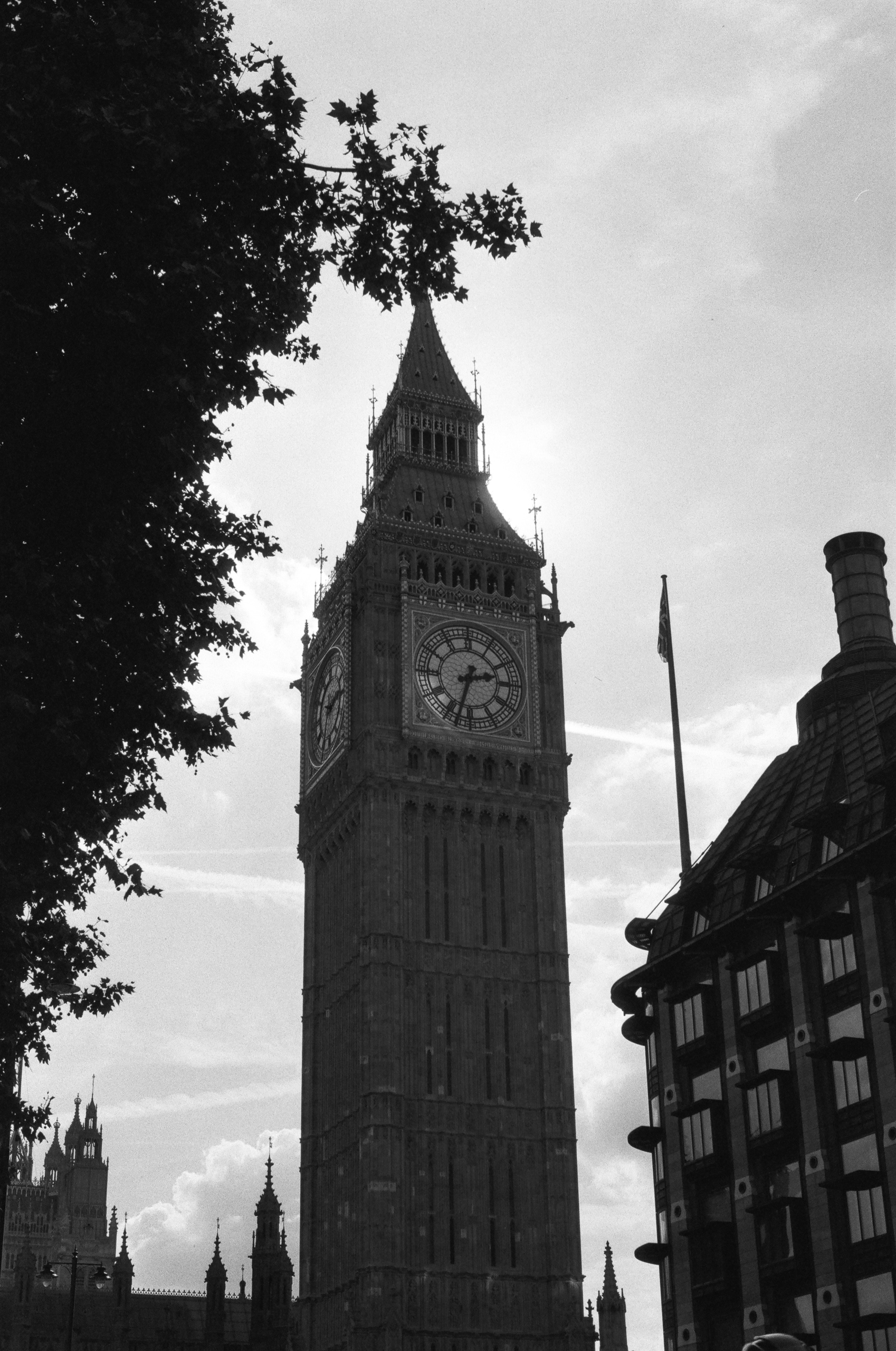
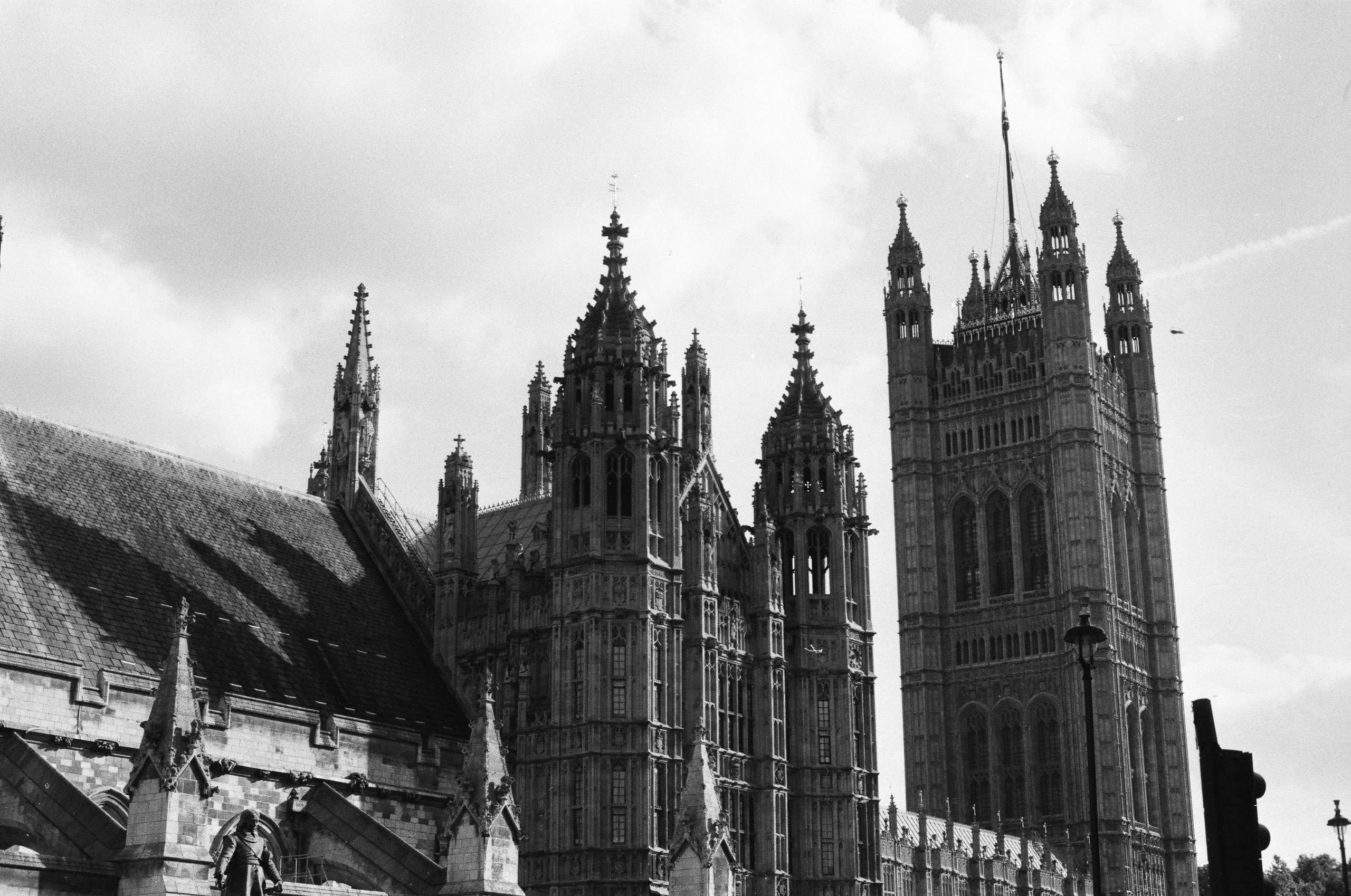
Overall, Frankenstein renders with moderate contrast, good highlight retention, and a nice textural grain, sharp in its detail while still retaining that classic film look. The community consensus, and it’s a strong one, is that it’s Fomapan 200 Creative in FPP packaging. I knew none of that at the time. All I had was the salesman’s promise of Halloween in a can: exaggerated, creepy effects, maybe cobwebs etched into the frame, an old and antiquated feel. So that’s what I chased. All day I hunted for compositions that would elicit a classic black-and-white horror film. The surprise came later, in the results, which turned out far more artful and restrained than the monster movie I’d gone looking for.
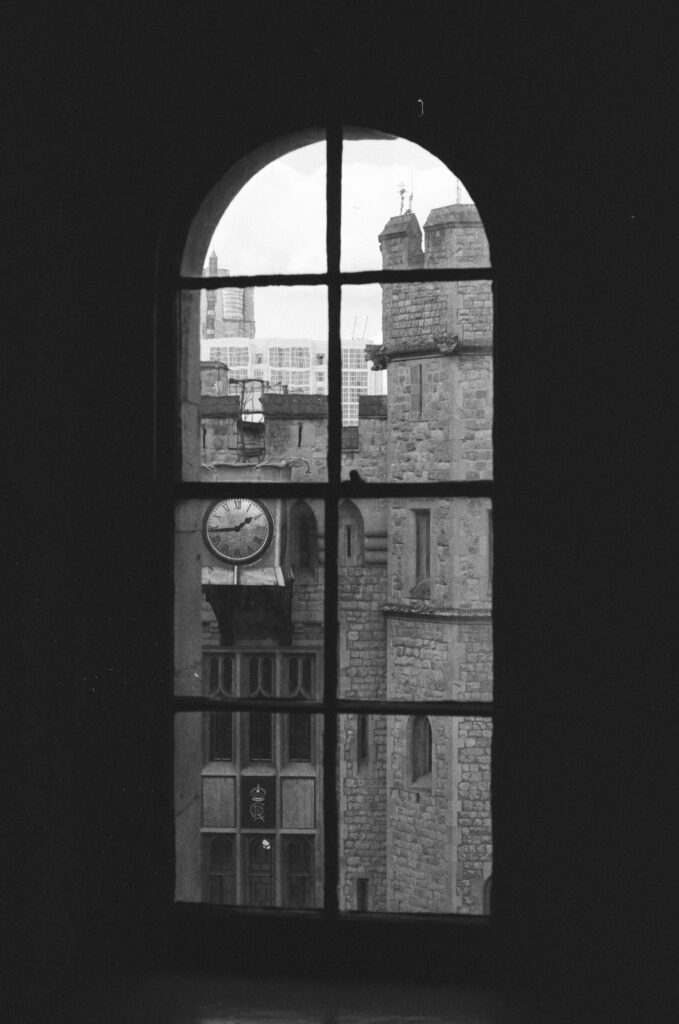
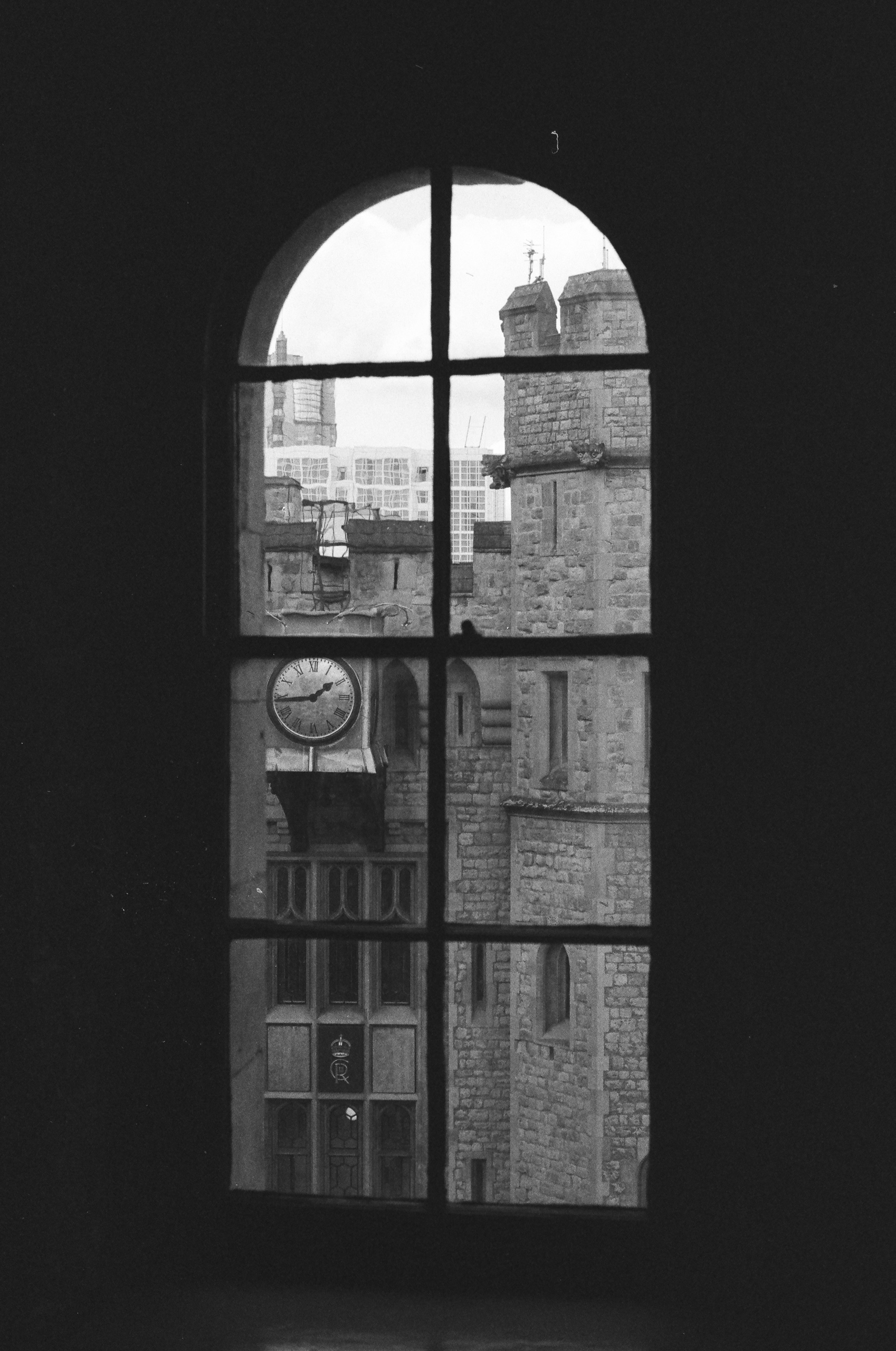
Take this shot through the window. The panes were old, the glass a little stained, an old clock visible outside. It felt eerie. I was standing in a dark, quiet corridor inside a building hundreds of years old, and that’s exactly where my head was. I was actively looking for frames like this. No, I didn’t get the exaggerated Halloween look, but I’m not mad about it. Look how mellow the image is. It carries the same feeling as the church frame before it. The dreaminess is really the fast lens wide open in low light, while the film itself does the technical work underneath: sharp detail, textural grain, medium contrast.
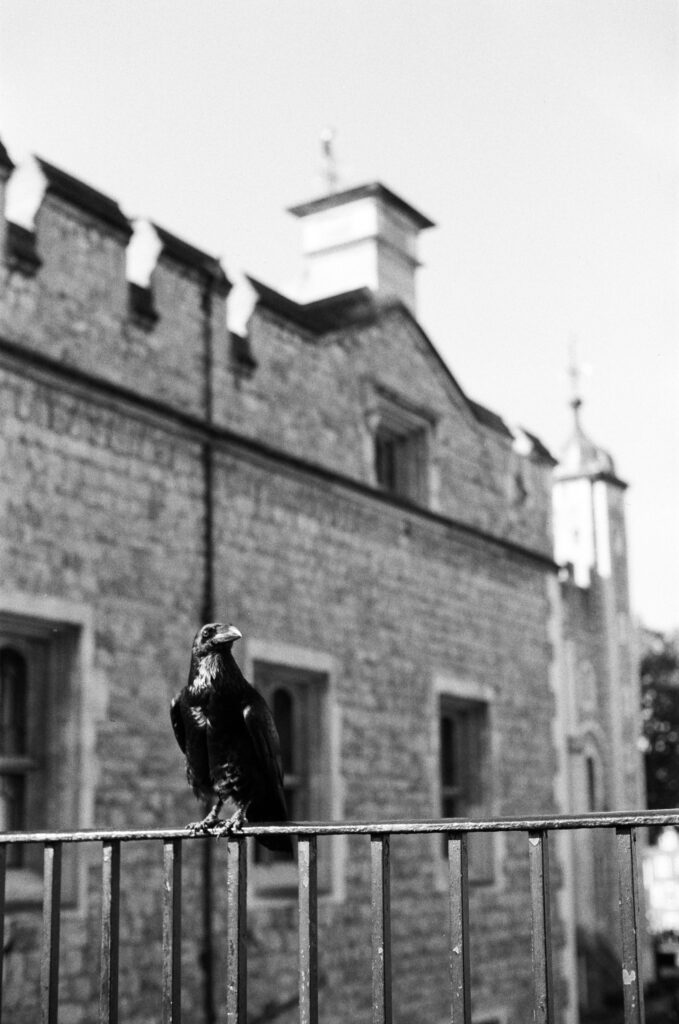
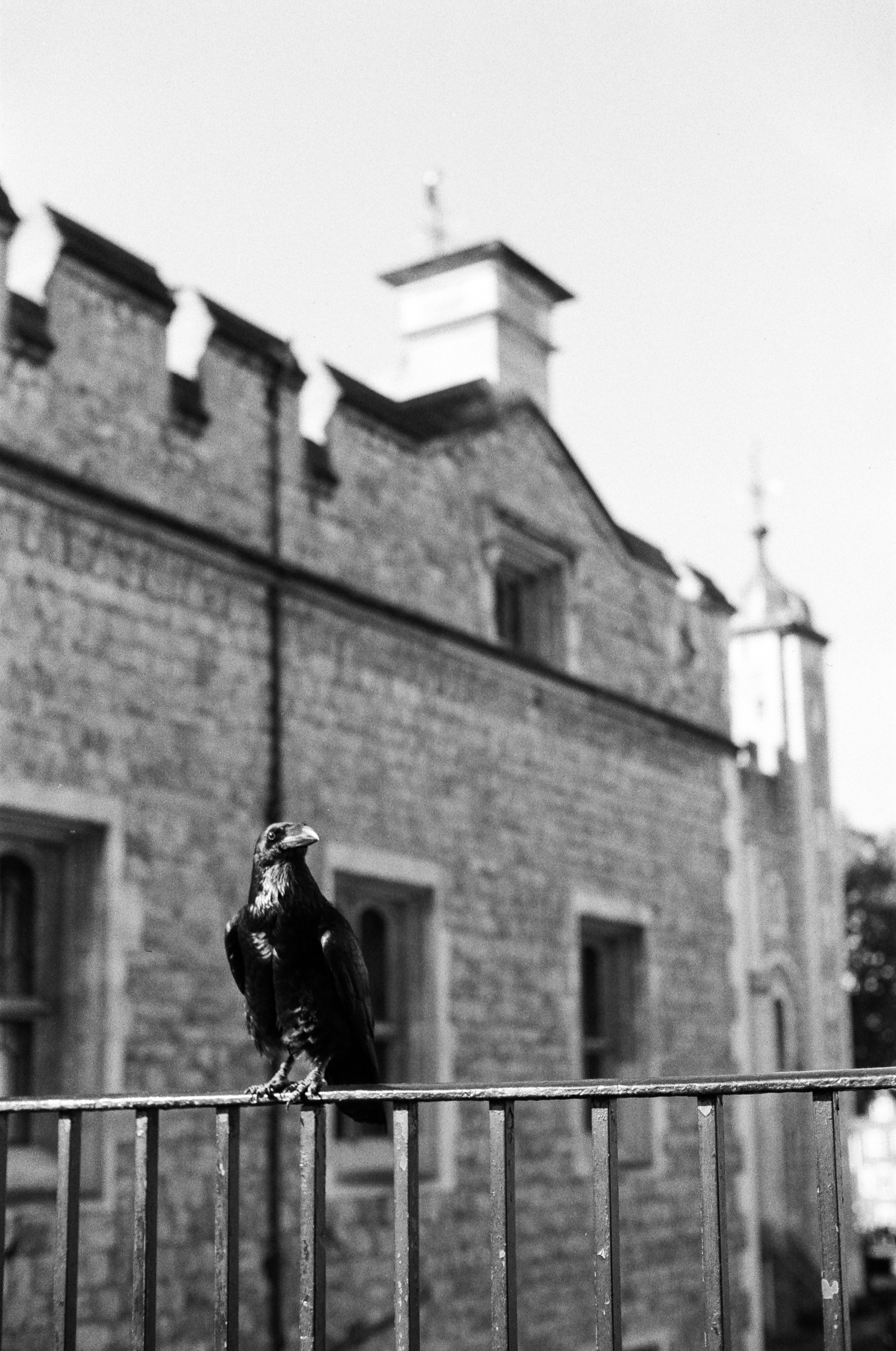
And our friend here, one of the ravens that live on the Tower grounds, sent my mind straight to Edgar Allan Poe and the omens that trail these black birds. I was in a gothic frame of mind all trip, and willing subjects weren’t hard to find. A fitting bit of lore: the Tower’s ravens are protected by a legend that says if the six resident birds ever leave, the Tower and the kingdom will fall. Old as it is, the legend still holds. A Ravenmaster tends the birds 365 days a year, and each one eats about 170 grams of raw meat a day, plus bird biscuits soaked in blood. And though the rule requires a minimum of six, the Tower keeps seven or more as a buffer. Clearly, plenty of people still aren’t willing to tempt it.
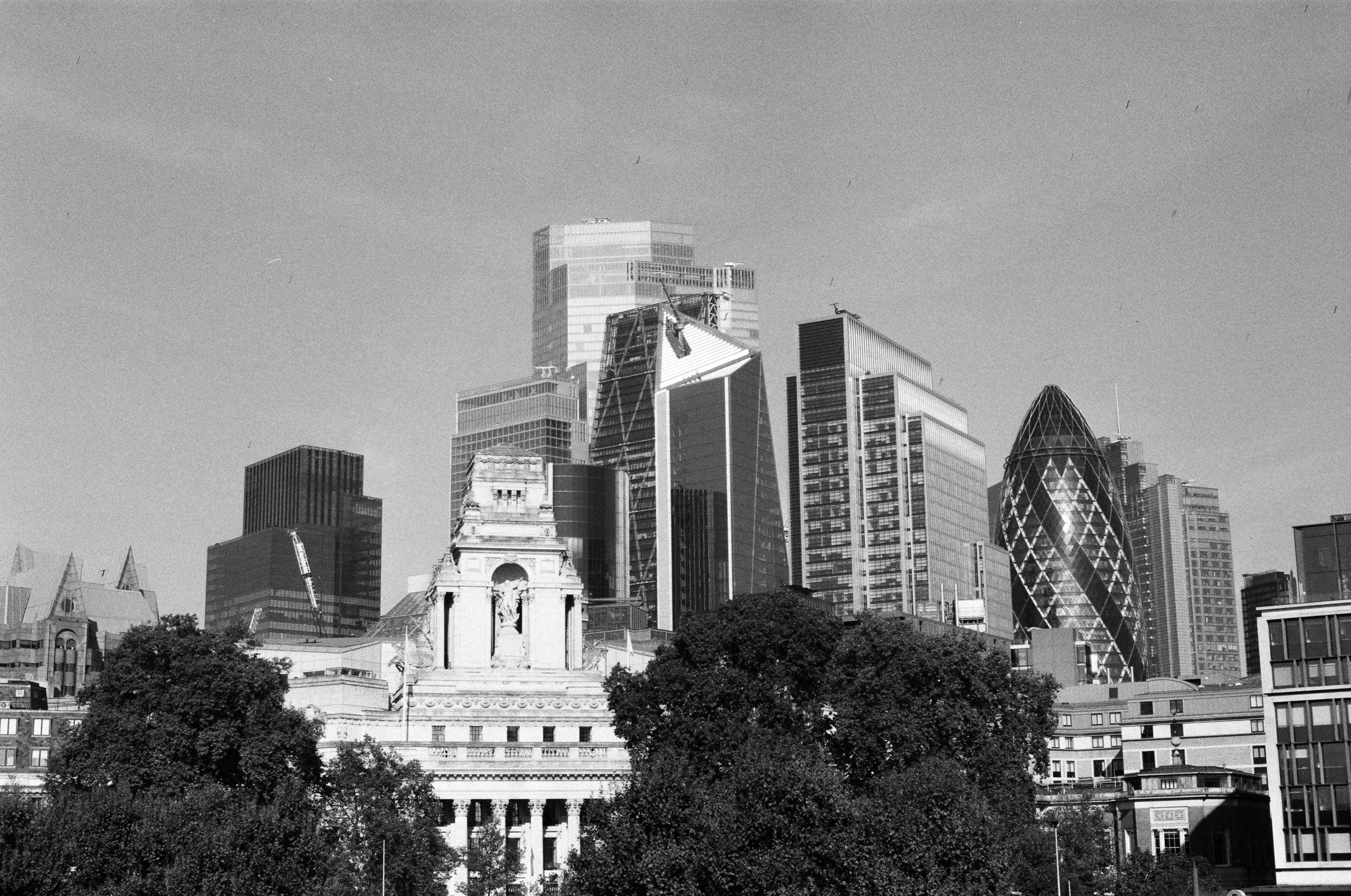
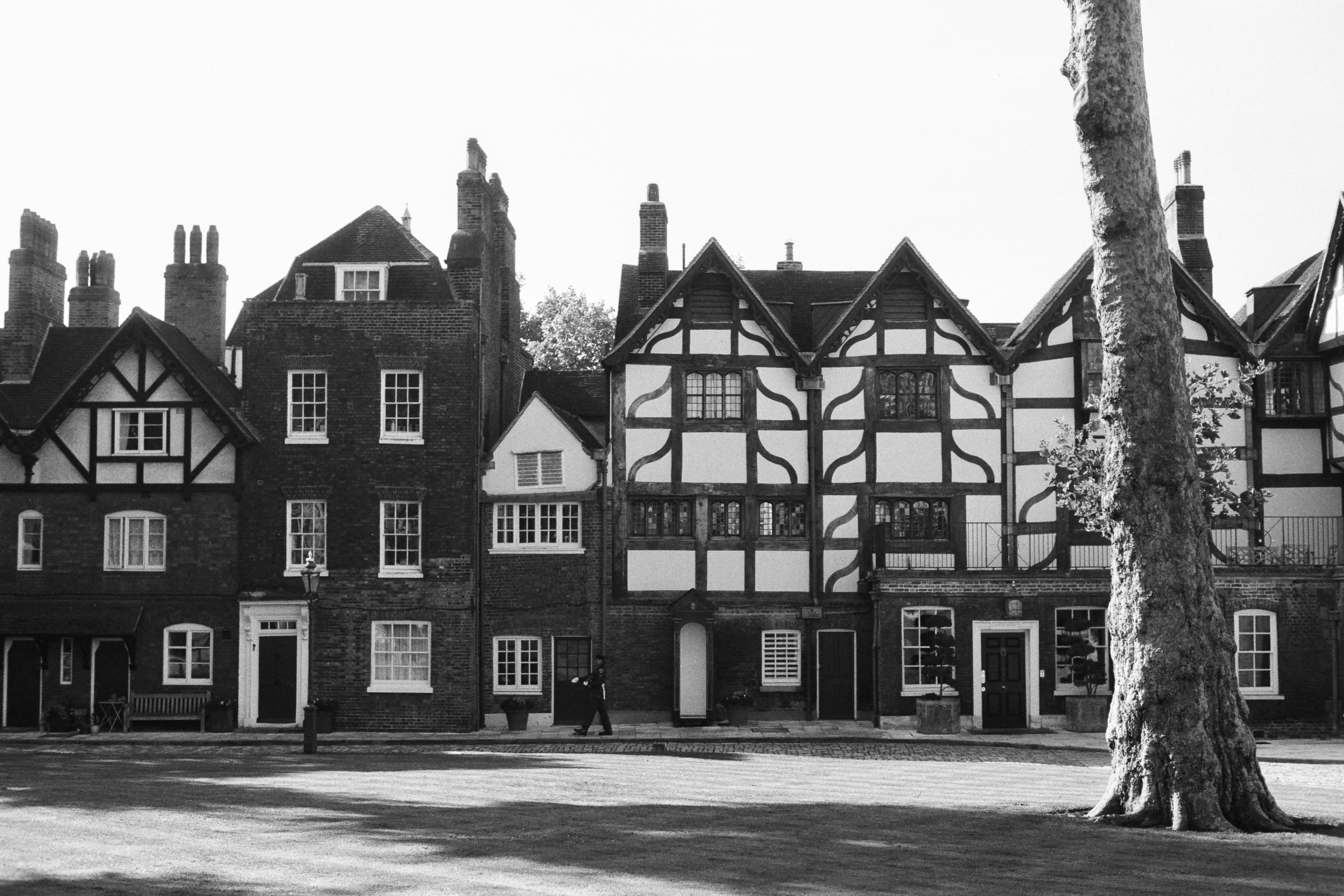
As the day wound down, I found a clearing with a clean view of the cityscape. Framing it, I realized I hadn’t taken a plain, straightforward photo like this all trip, and that a frame like this would tell you a lot about the film. It did. In the open sky you can see not just grain but texture: small scratches, tiny blemishes. And you can read the contrast here too, fairly average, with little tonal separation between the buildings and the sky.
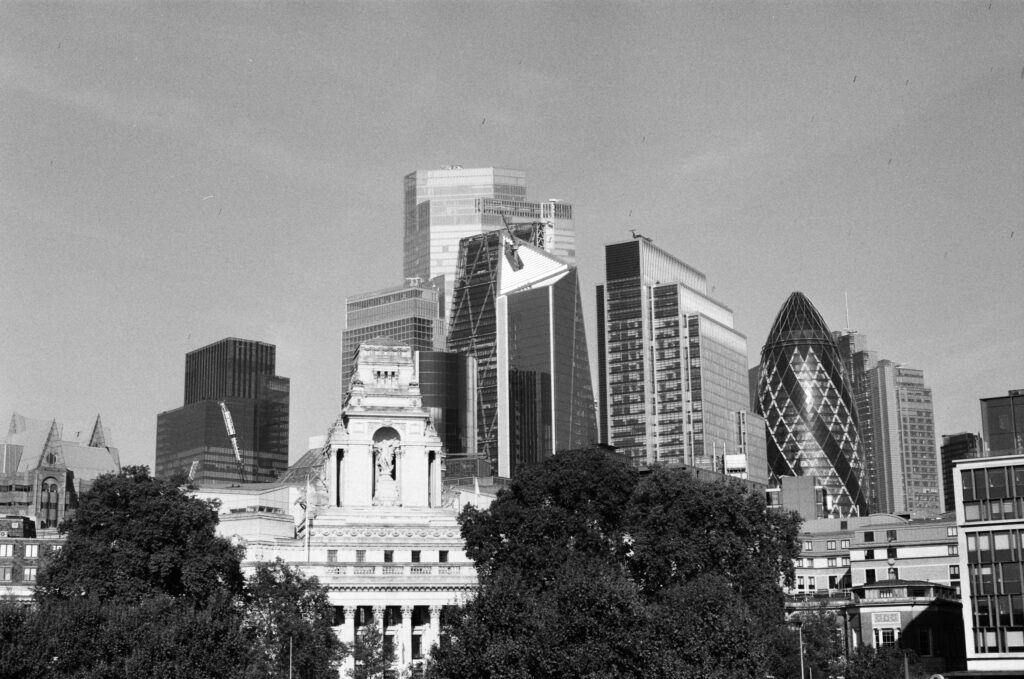
I went into this shoot knowing nothing about the film. I always centered the needle and metered at box speed with every shot. That’s partly why some of the shadows sit as dark as they do, since Frankenstein wants a little more light than its ISO 200 rating suggests. What I didn’t expect was the softness. That was my lens and the low light more than the emulsion, but the combination worked, and some of these frames I find genuinely beautiful.
If you do want the creepy, Halloween look I kept chasing on this trip, you’d be better served by something like Kodak Double-X or Ilford Delta 3200. Both build a naturally eerie aesthetic out of heavy grain, deep shadows, and stark, high-contrast light. Double-X is a motion-picture stock used in modern psychological thrillers like The Lighthouse, and Delta 3200 thrives in extreme low light, rendering scenes gritty, ghostly, and unresolved.
If Frankenstein 200 sounds like your kind of film, that subdued, pretty look, with classic analog texture, moderate contrast, and a reasonably wide tonal range, you can find it in stores or online, here. Thanks for reading, and until next time.
Shot on Frankenstein 200 in London