Mummy 400 in North Wales
- Camera
- Pentax KM
- Lab
- Alien Film Lab by B&C Camera
- Scanner
- Noritsu HS1800
In early October 2025, I continued my journey through the UK. I’d enjoyed my time in London, and I was happy with the frames I captured there on FPP’s Frankenstein 200.
With my business obligations behind me, my colleague and I headed into Wales to see some medieval castles. We hired a driver to take us from Liverpool to Caernarfon Castle, our first stop, about an hour and a half away. We left early in the morning and arrived starving, so we stopped at a small café for a traditional Welsh breakfast. We got there two minutes before the doors opened, and an elderly couple welcomed us in. It felt like a true mom-and-pop place, the kind where you know the food will be homemade. It’s called Y Gegin Fach, which translates to “Little Kitchen,” and I’d highly recommend a visit.
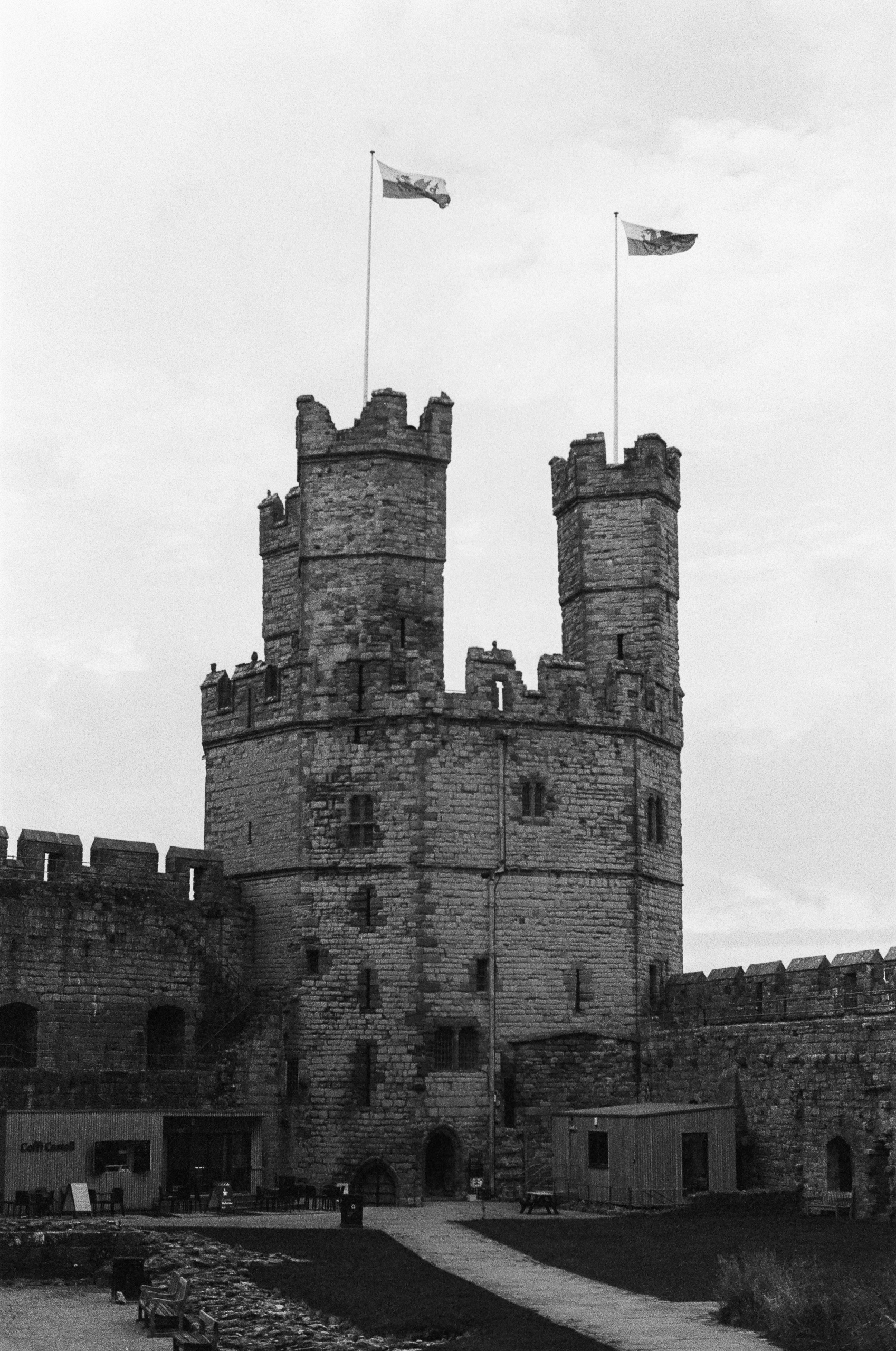
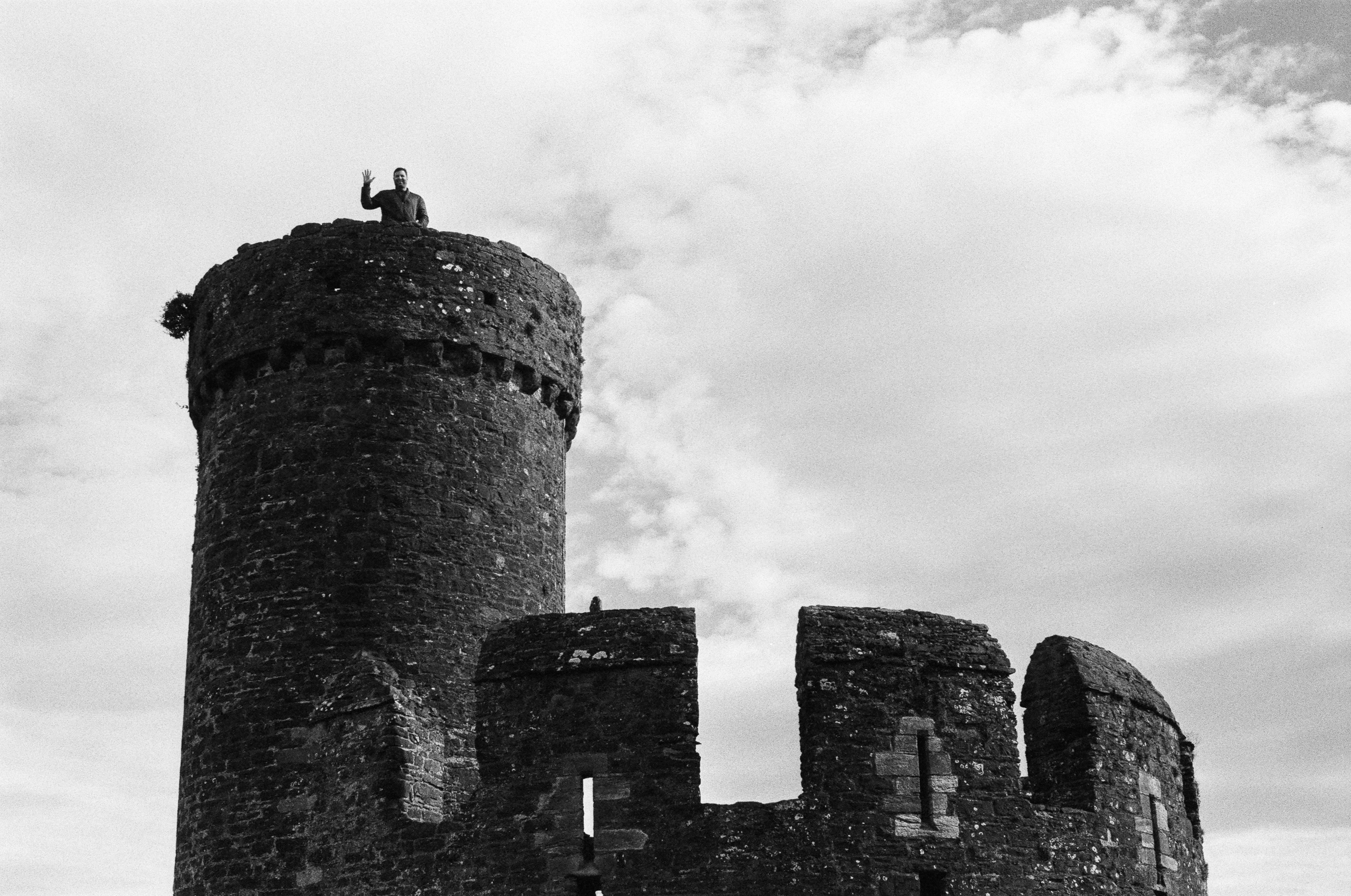
Caernarfon is home to roughly 10,000 people, and the castle sits at the waterfront edge of its walled old town. Over beans on toast and a comforting mug of hot chocolate, my colleague and I excitedly talked through the day ahead. First up was Caernarfon Castle, which King Edward I of England began building in 1283, after he conquered the region, to hold military control over Wales and project his authority.
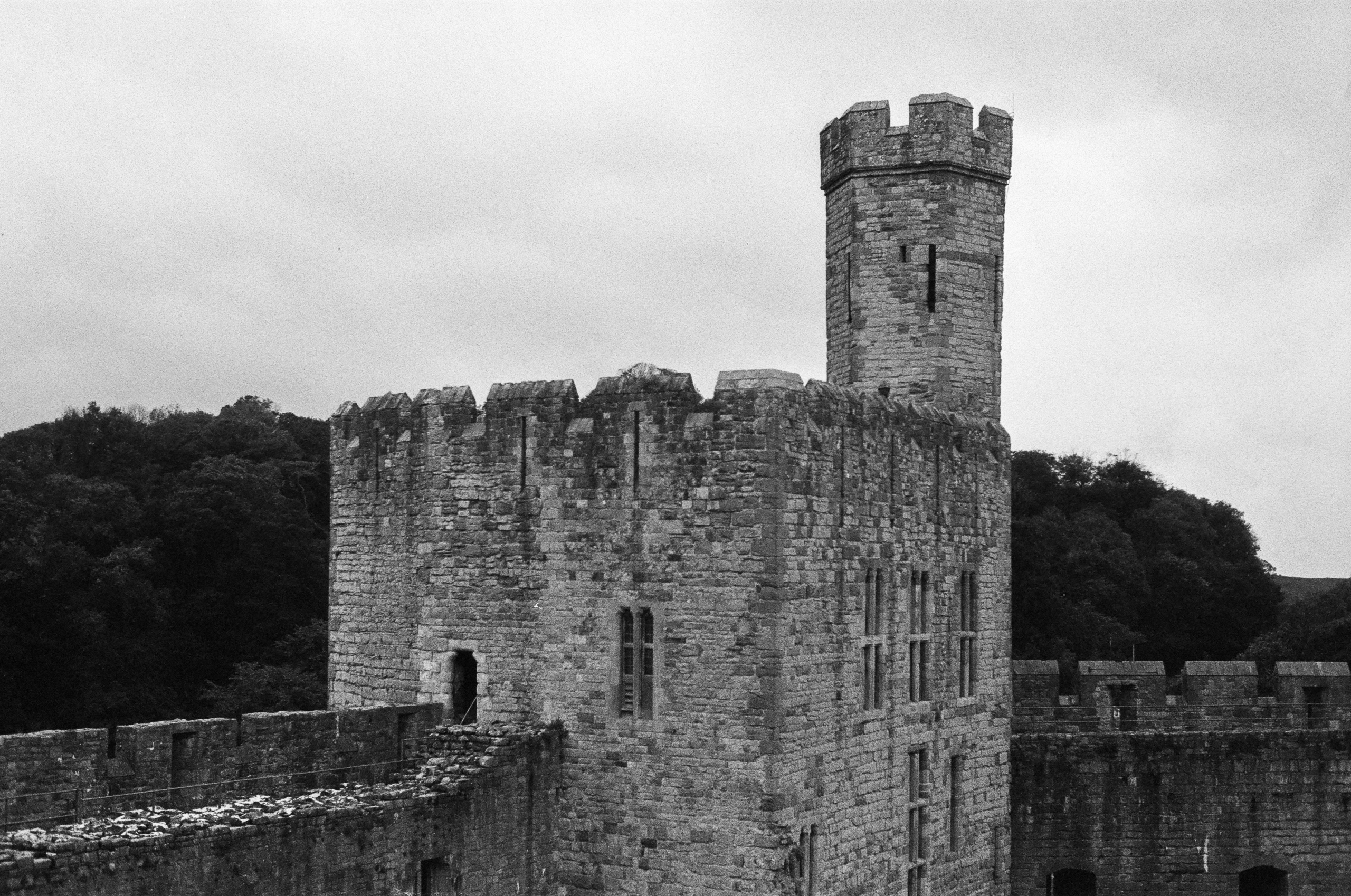
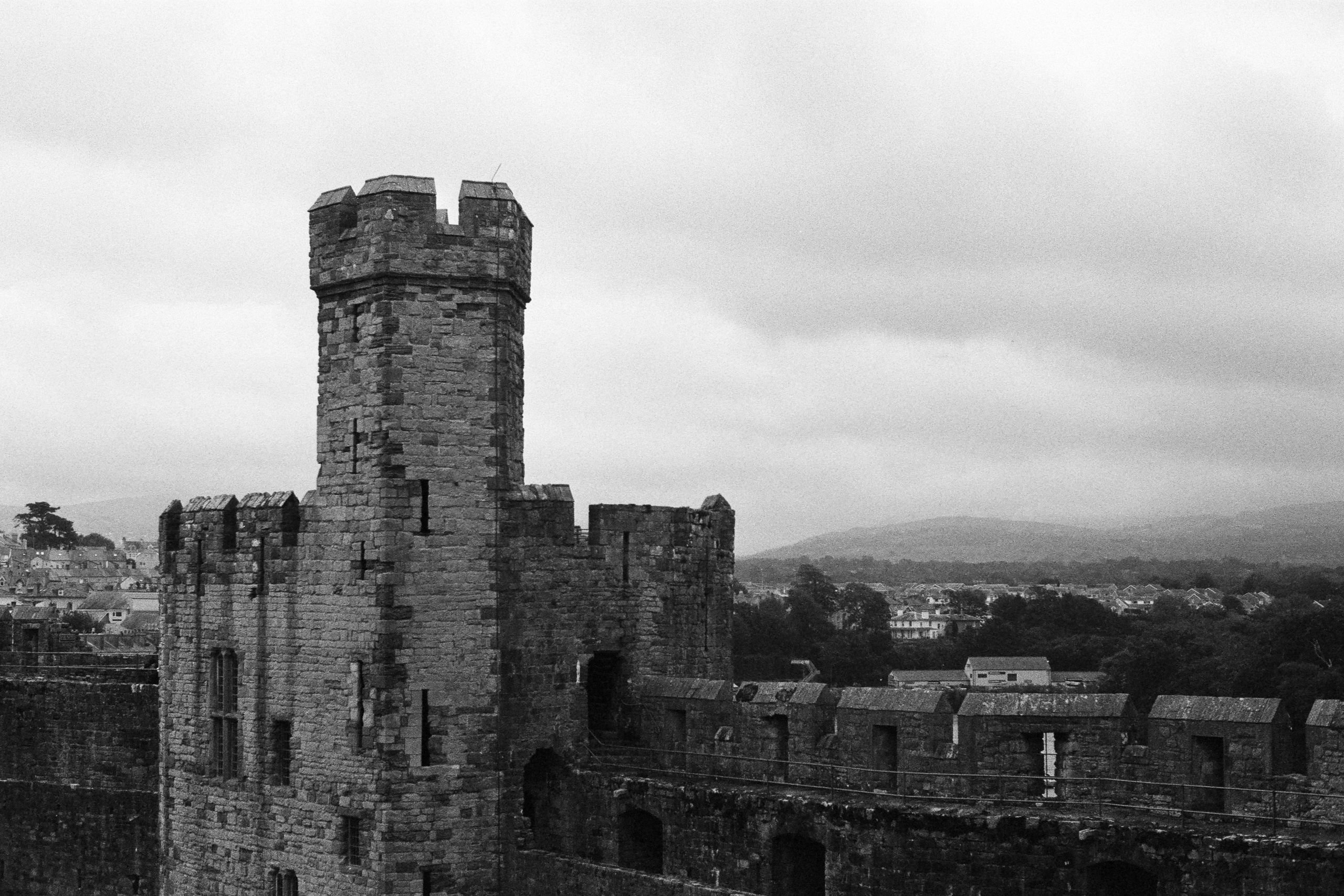
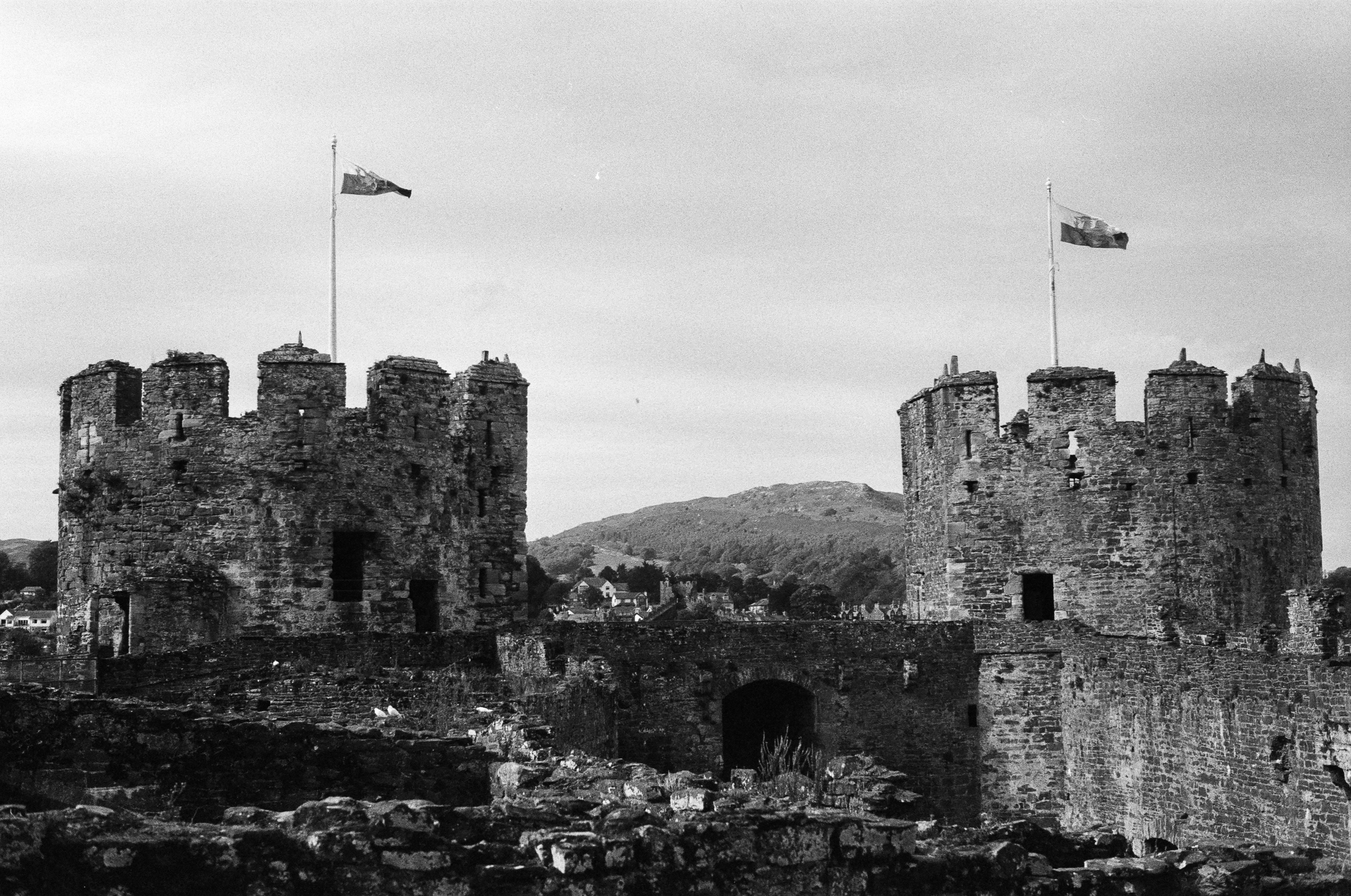
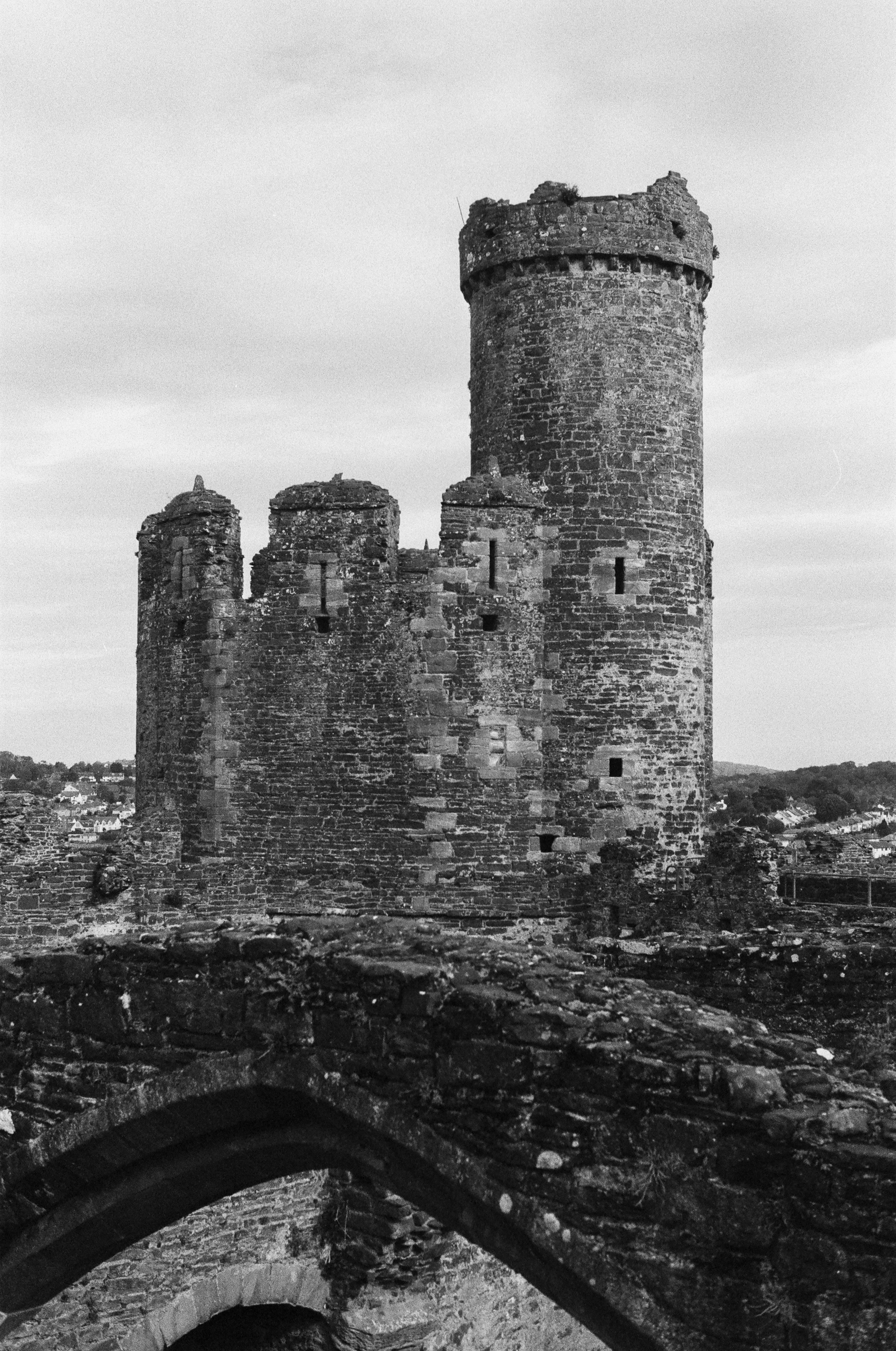
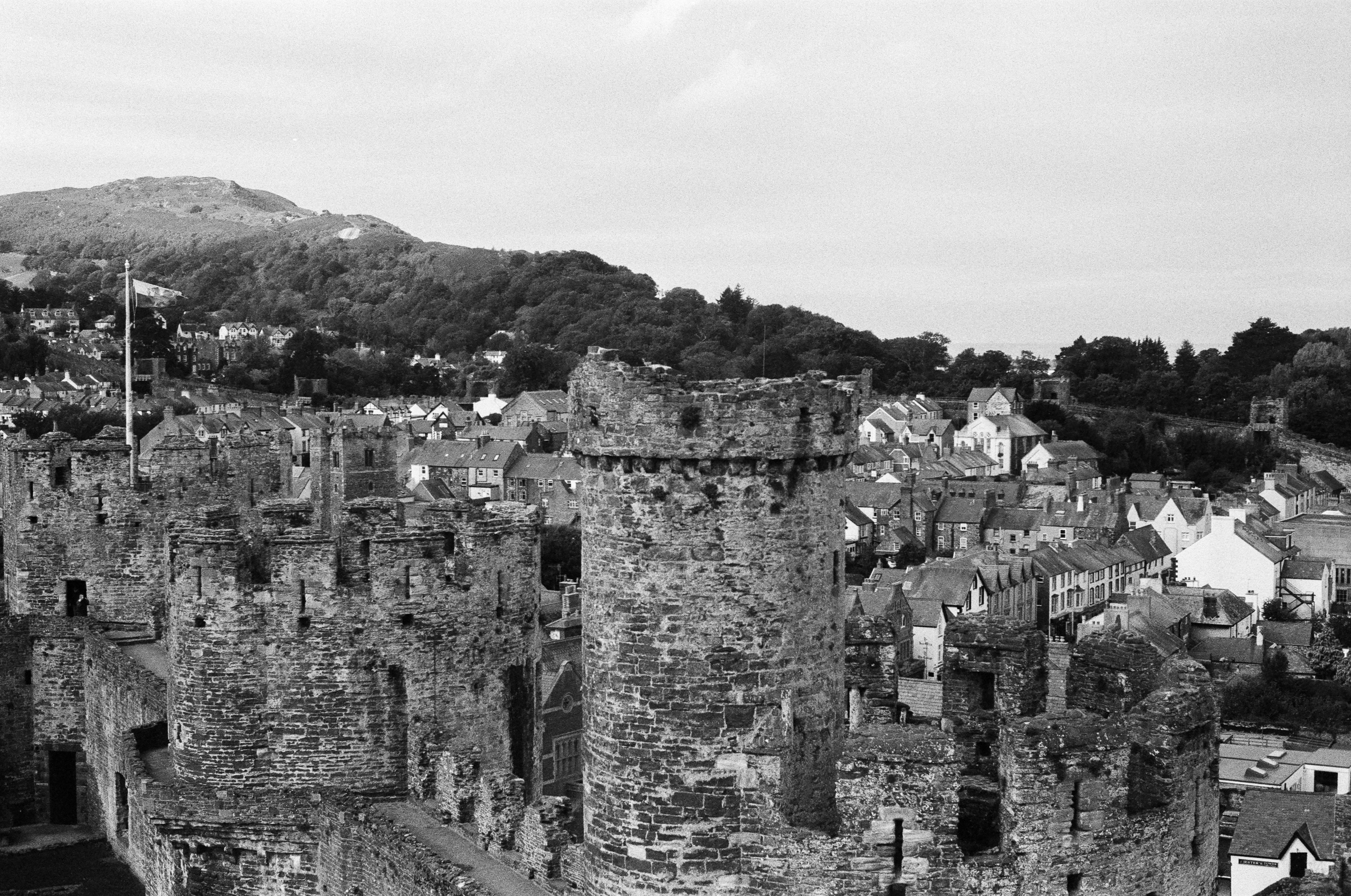
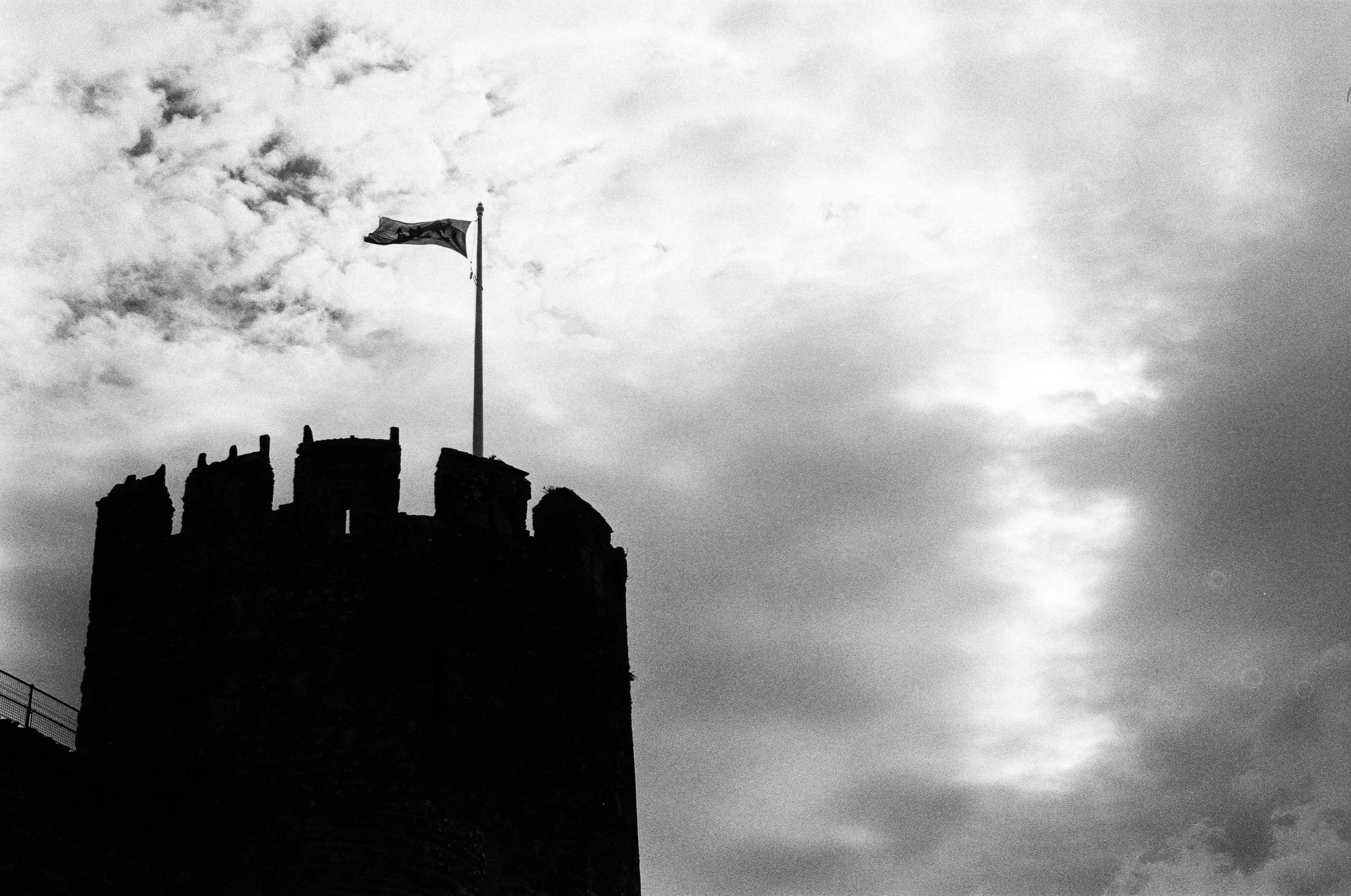
A place with that much history felt like a natural subject for film, and what better stock to bring than FPP’s fastest monster film, Mummy 400. As I mentioned in my last article, I’d been told this series makes your photos look like stills from a horror movie, so that’s what I expected. What you actually get is very different. Mummy 400 is a medium-grain, medium-contrast film that gives a classic, fairly balanced black-and-white image. The grain is visible but not extreme, and the contrast isn’t harsh. In a setting like a medieval castle in Wales, the result is soft, poetic, and beautifully somber.
On this film, a simple composition holds a quiet weight, and a scene that feels dramatic in person can come out pensive. That’s exactly what makes the stock so versatile. It also leaves you room to work with the tonal range in post. In full transparency, I raised the contrast slightly on many of these images because I don’t like a scan that feels flat, and the result strikes a balance between soft and intense.
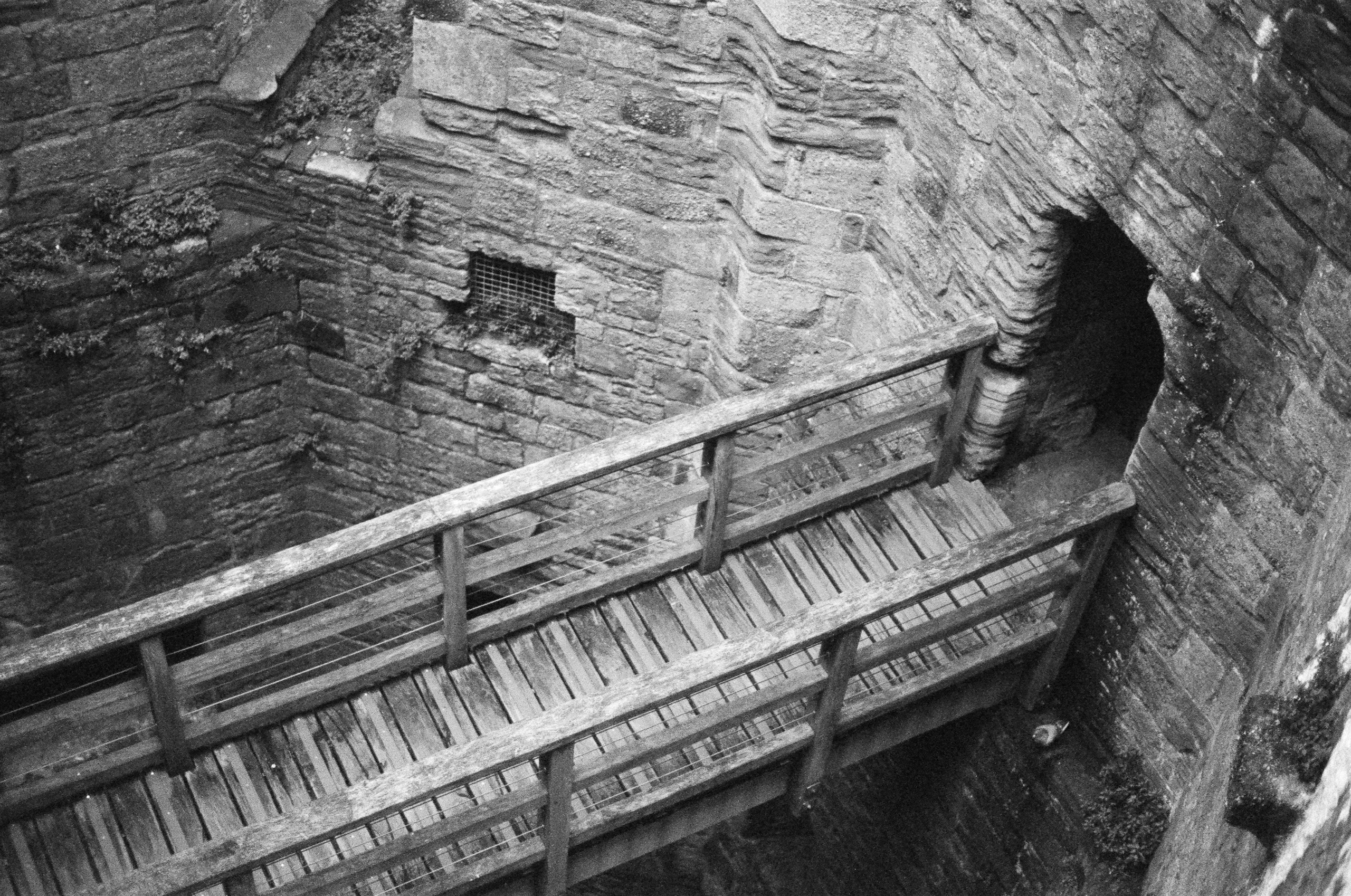
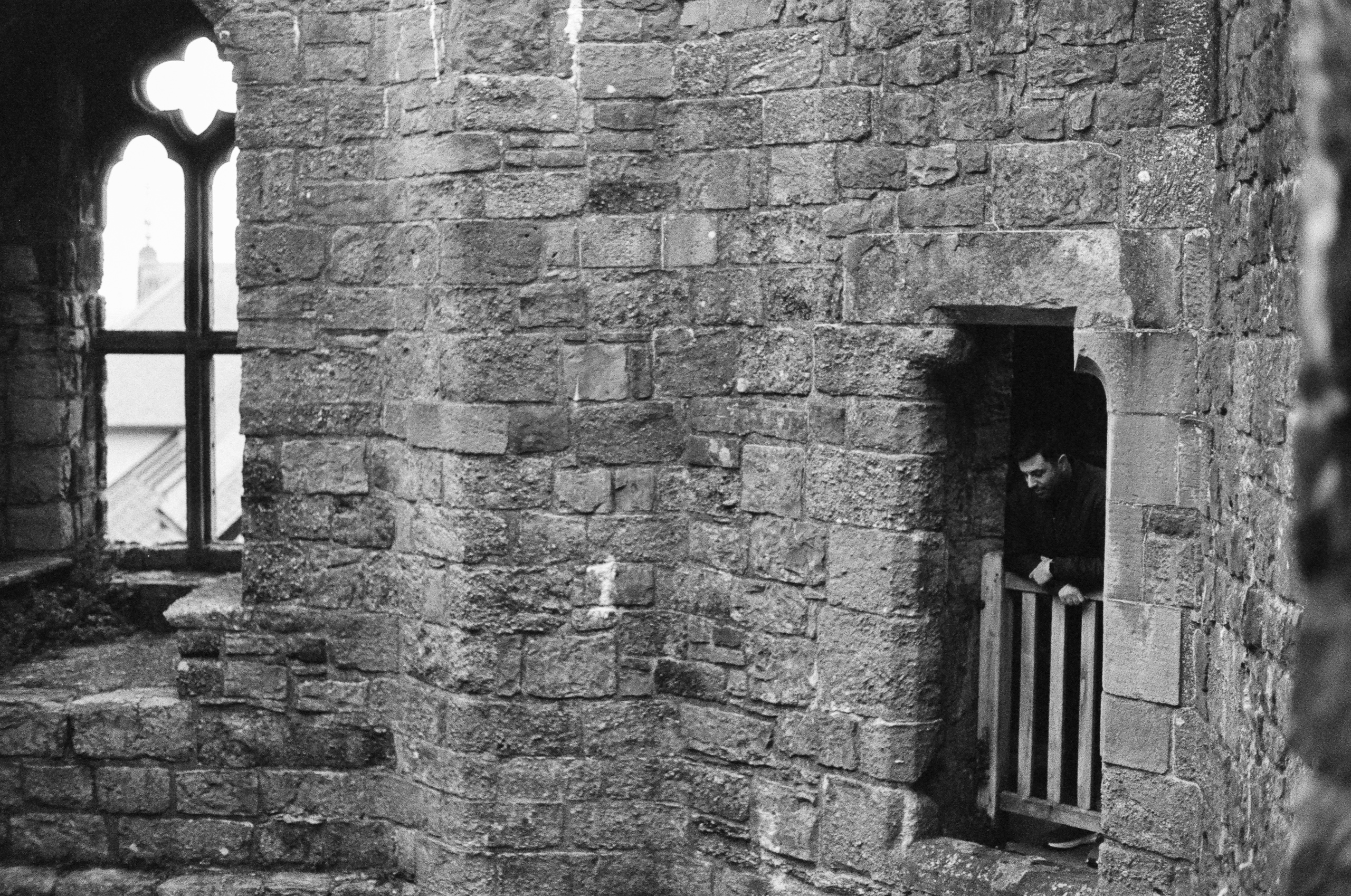
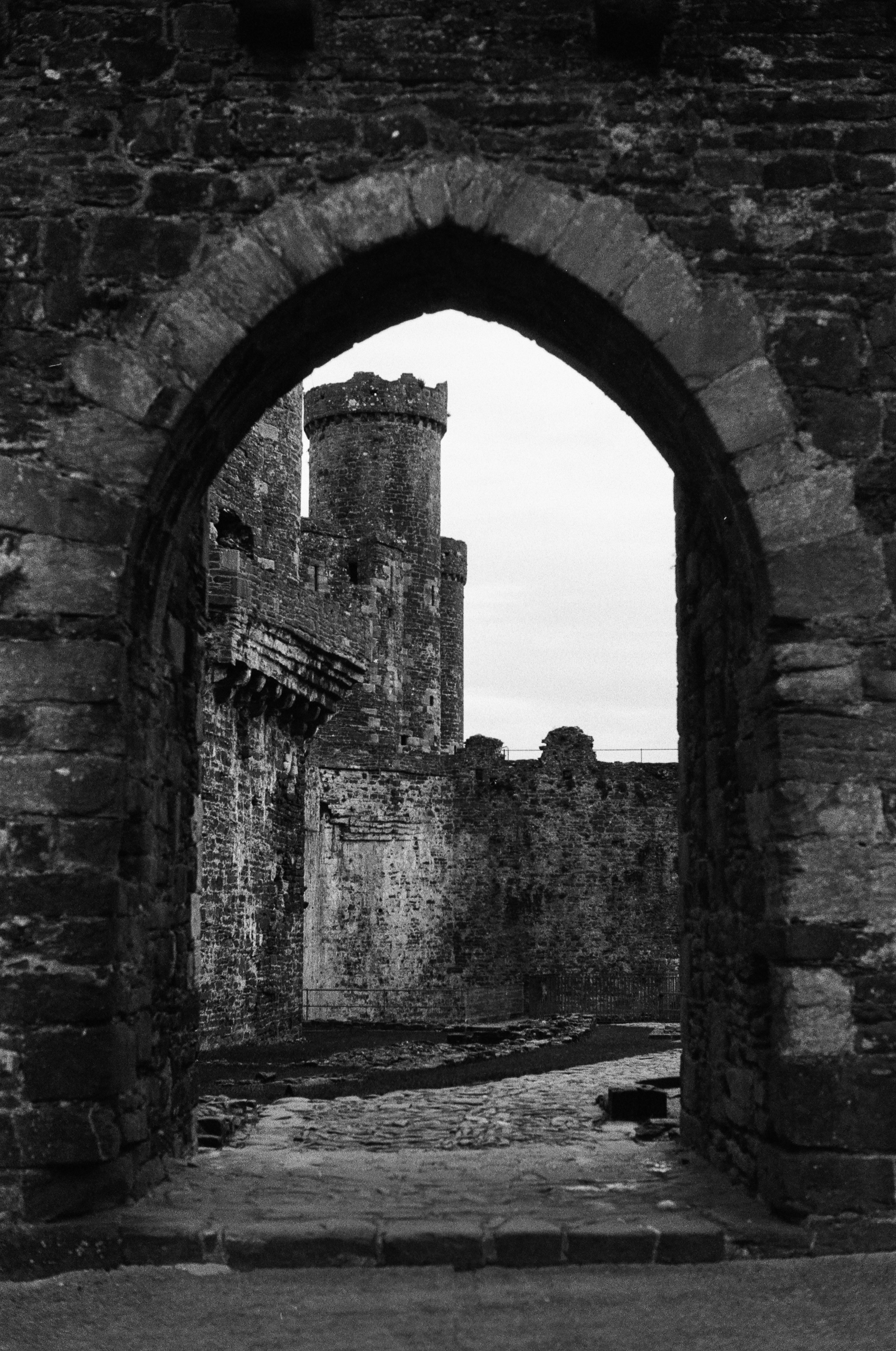
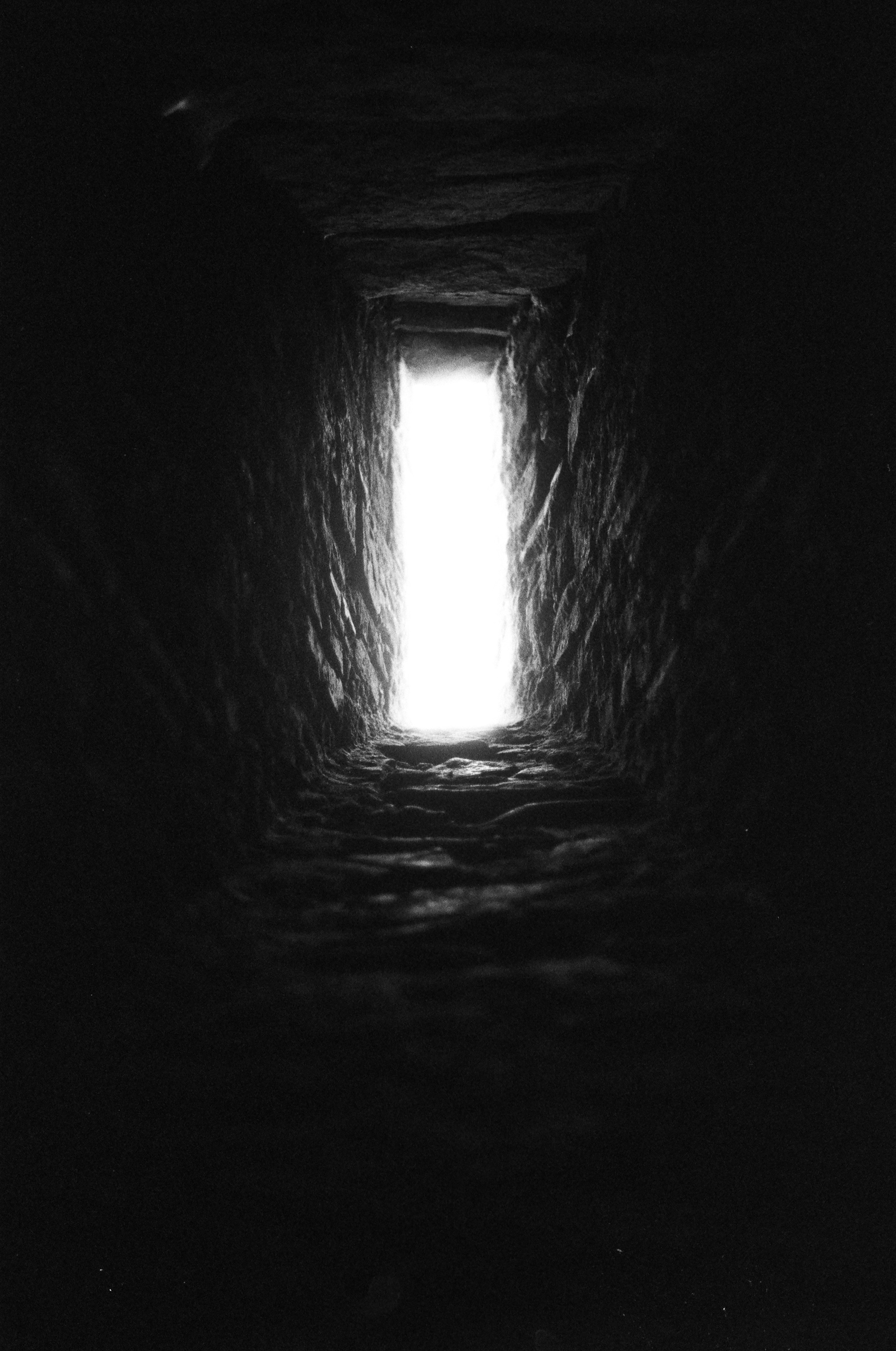
In the image above, my colleague was looking down at an eerie walkway that may well have been built more than 700 years ago (I’m not sure what has been restored since the castle went up). I followed his gaze and saw the old passage lead into a dark tunnel. My photographic sense tingled. Here I was, shooting a Halloween-themed film stock in October inside a medieval castle, and I couldn’t wait to see whether the emulsion would make the scene even creepier than it already was. I hadn’t spoiled the look of this film for myself beforehand, so I fully expected a stylized, spooky effect. That isn’t what I got, but the results turned out beautifully, and I wouldn’t wish for them any other way.
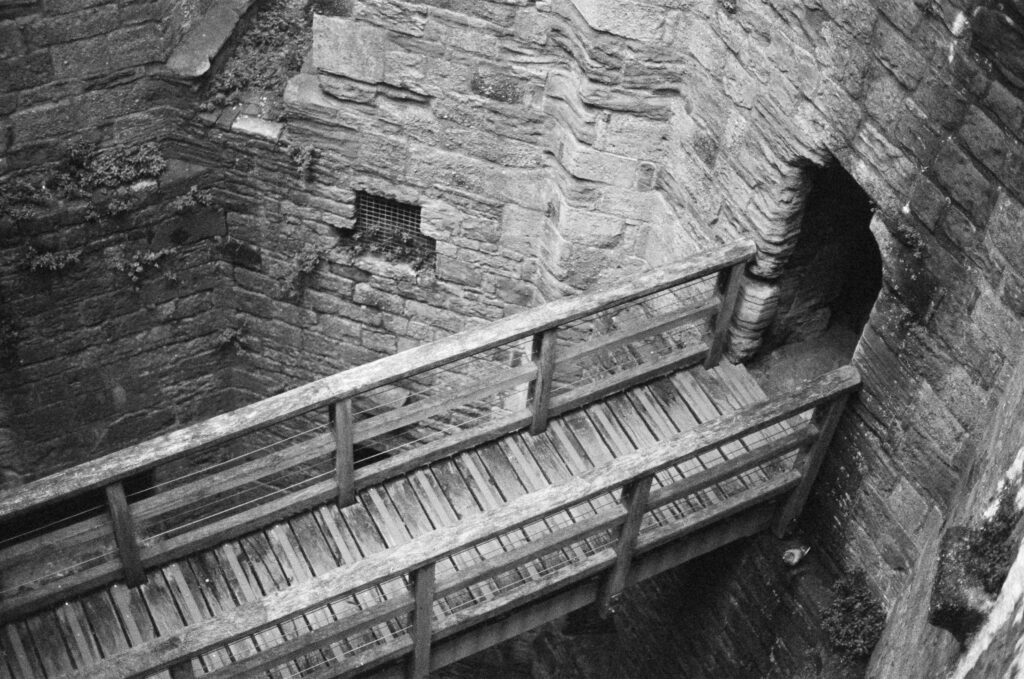
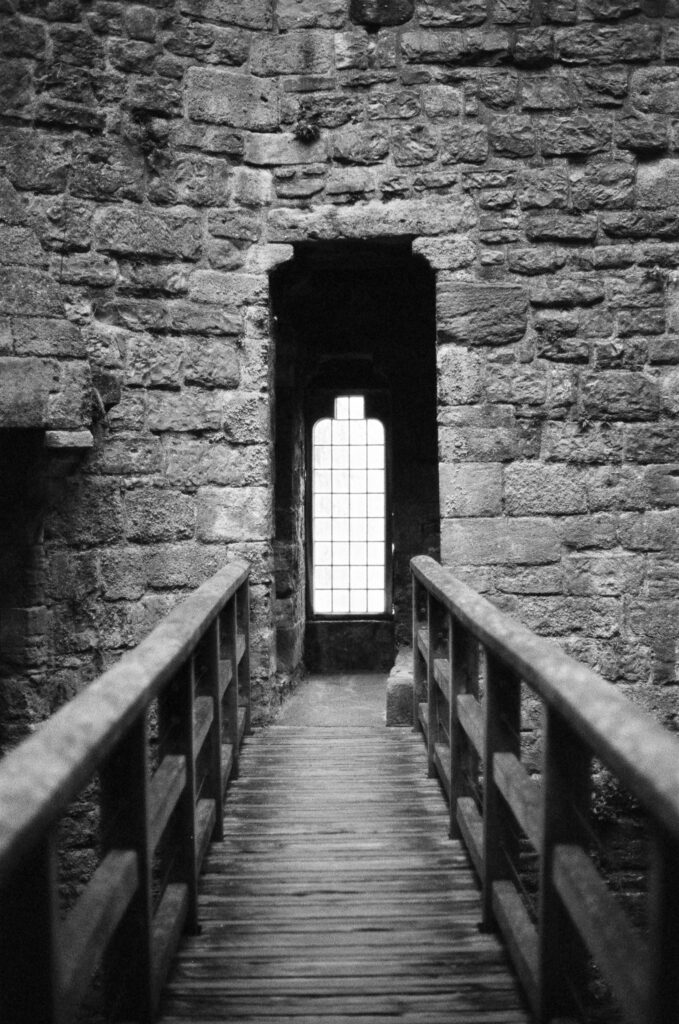
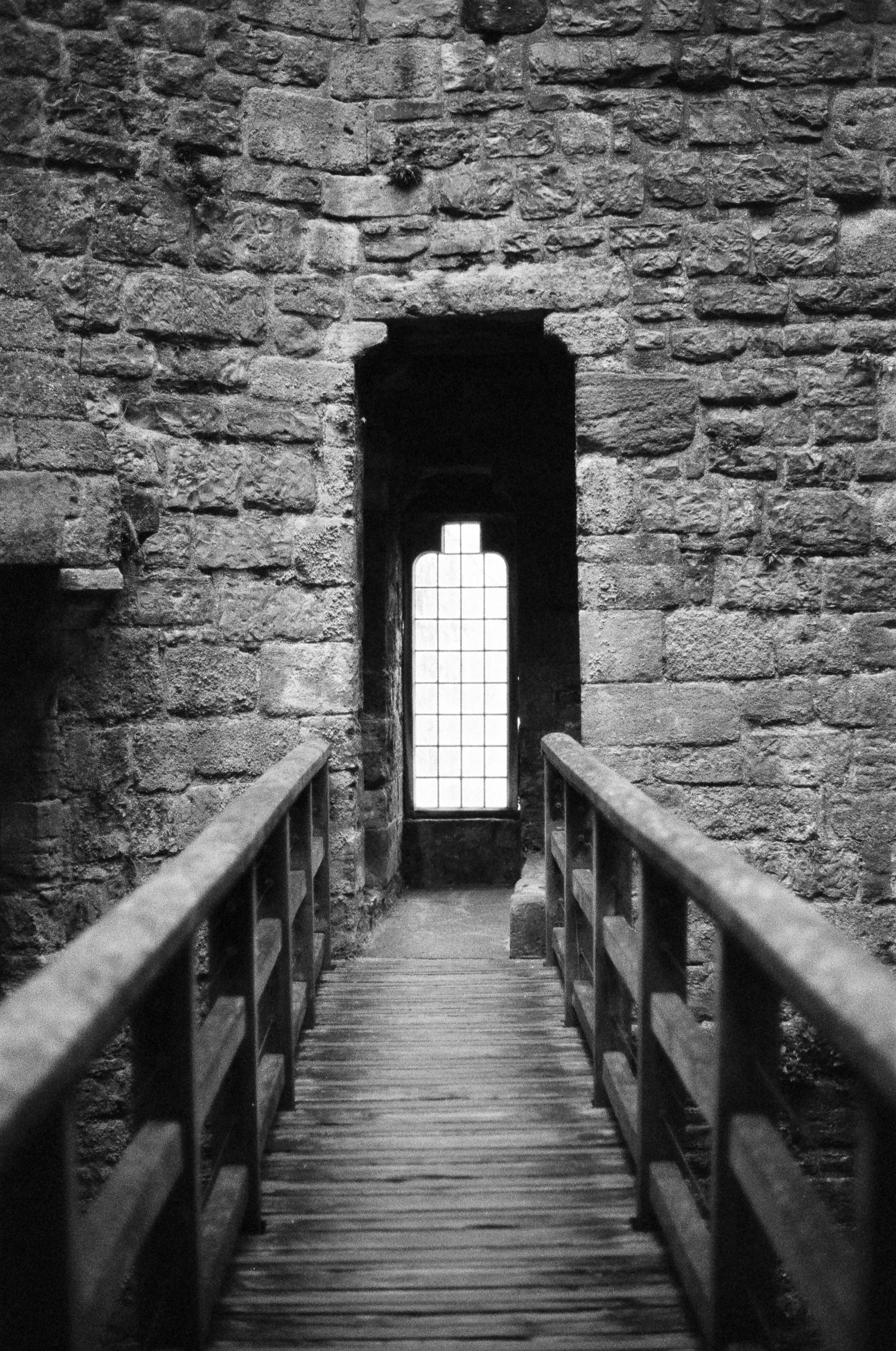
We later climbed down to walk the path ourselves. It was sturdier than I’d feared, and it led to a beautiful window shaped a bit like a water bottle. I pointed my camera down the barrel of the walkway, and to my delight, the off-center railings made the composition asymmetrical. The frame captures the dizziness you feel inside a structure this old. The walkways were confusing, the corridors cramped, and the staircases climbed in tight spirals. This image sums up that beautiful but nauseating trip through the castle: asymmetrical, yet intentional.
After leaving the castle, we met our driver again and headed to Conwy Castle, only about 40 minutes away. Conwy is a walled medieval town on the north coast of Wales with only around 4,000 residents, and its castle sits at the edge of the old town walls.
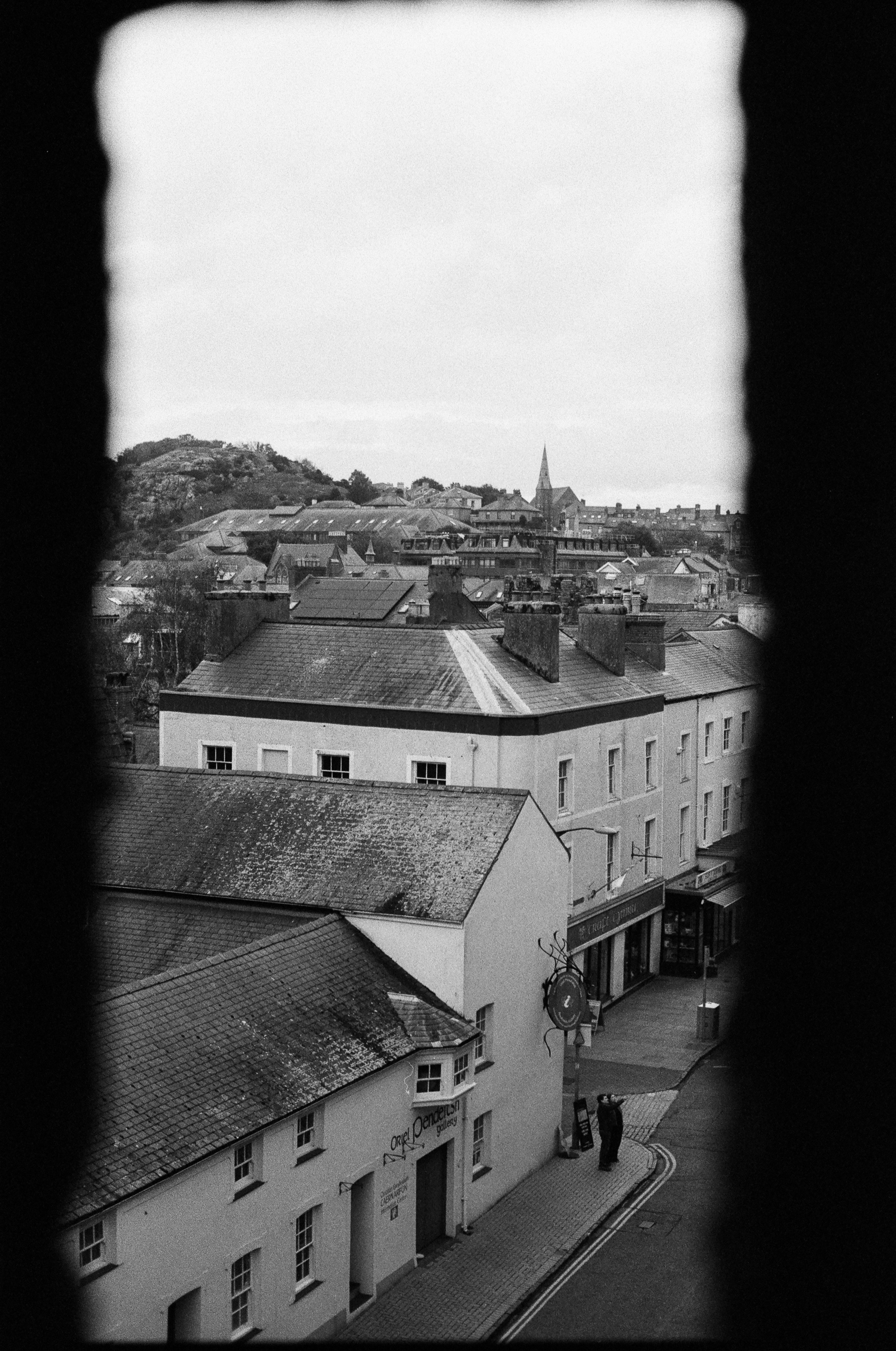
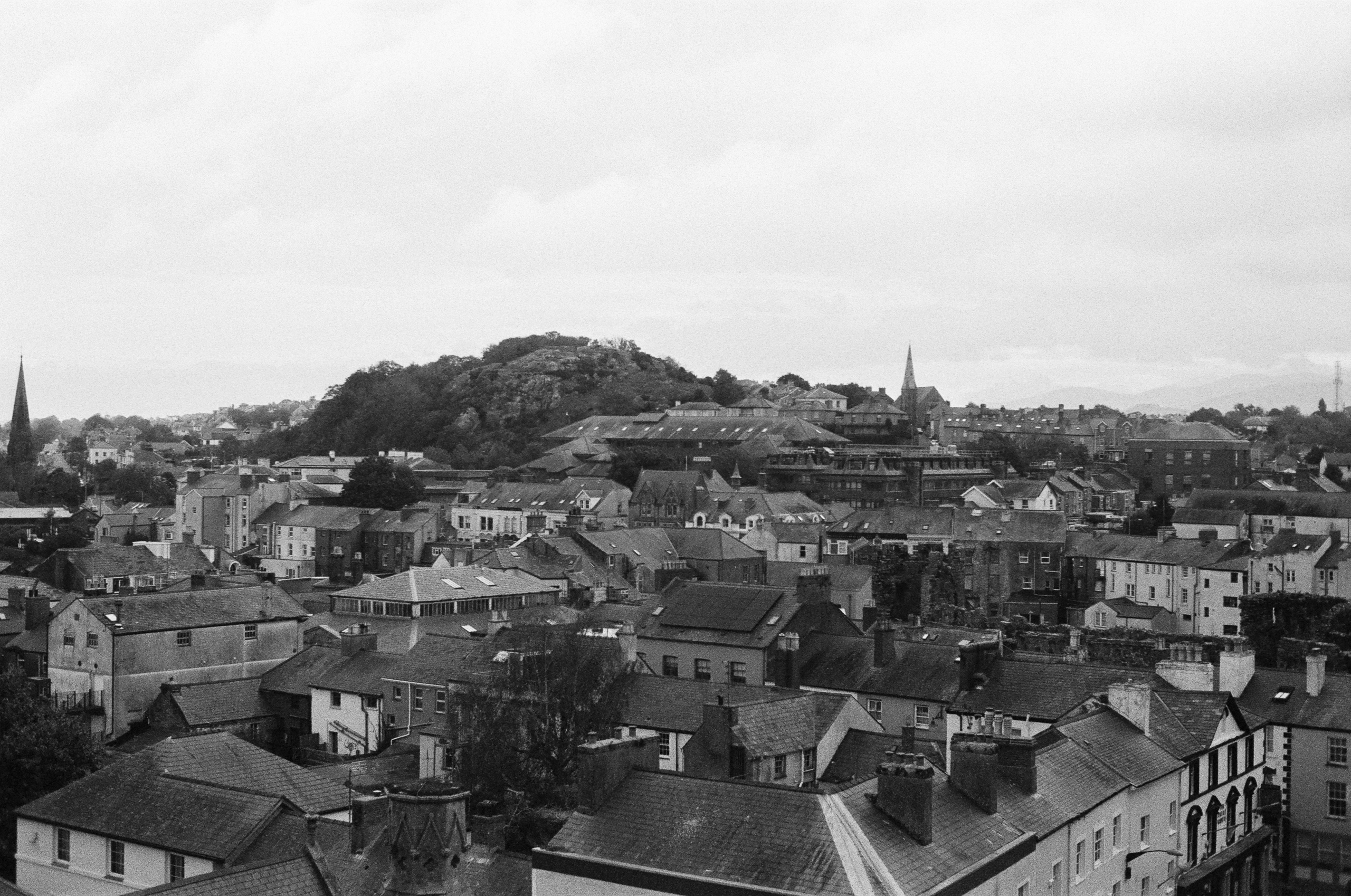
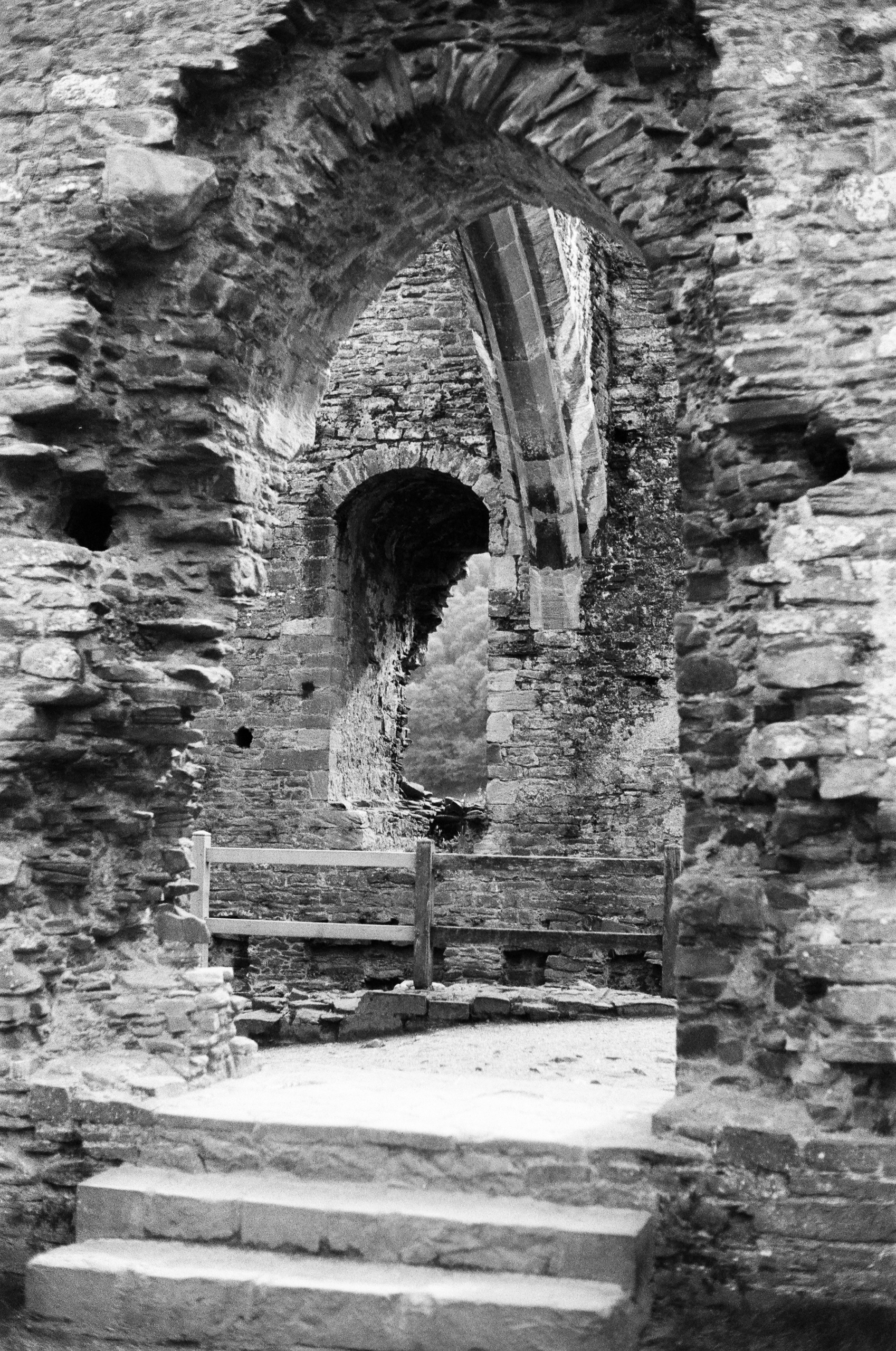
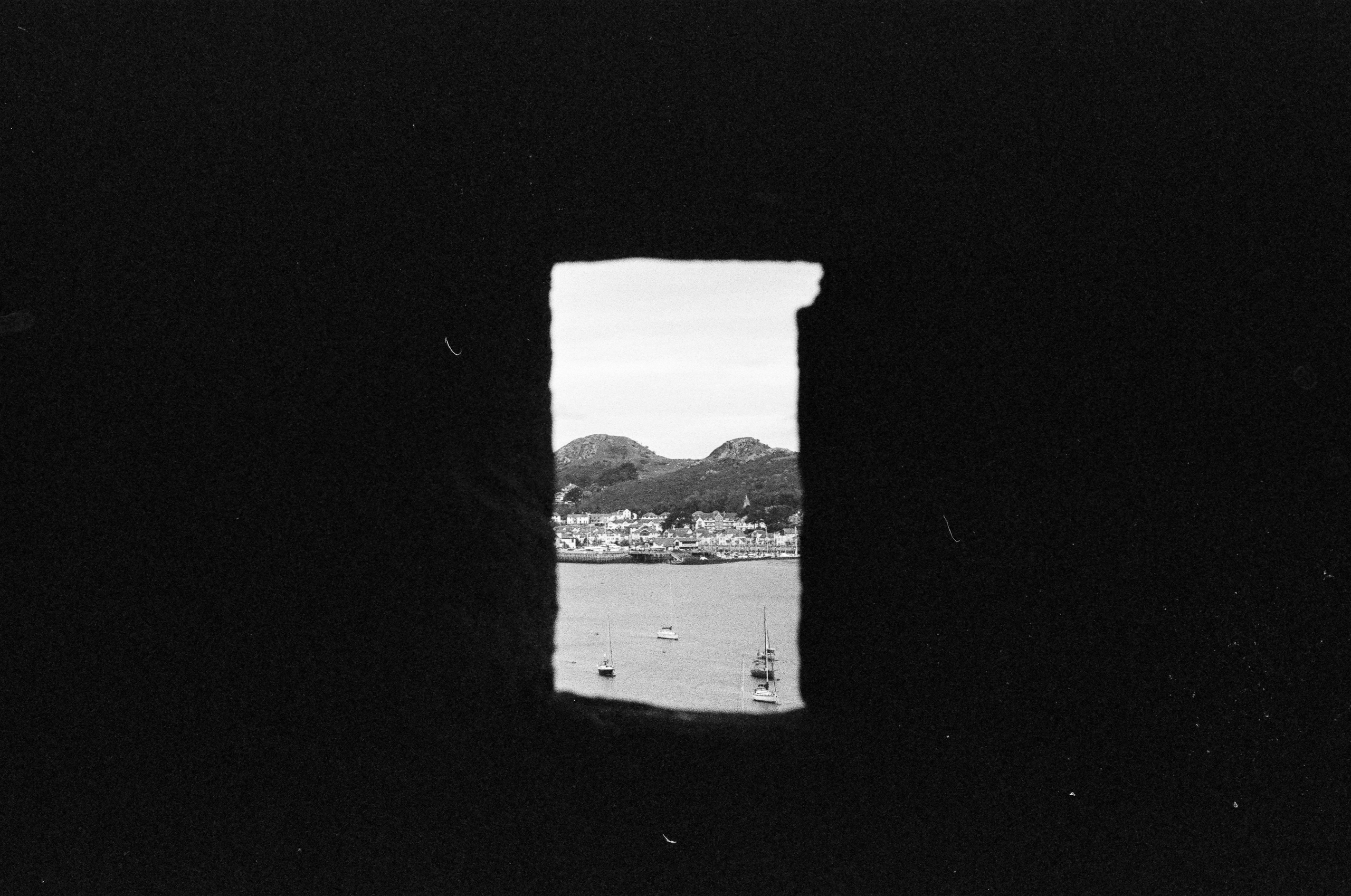
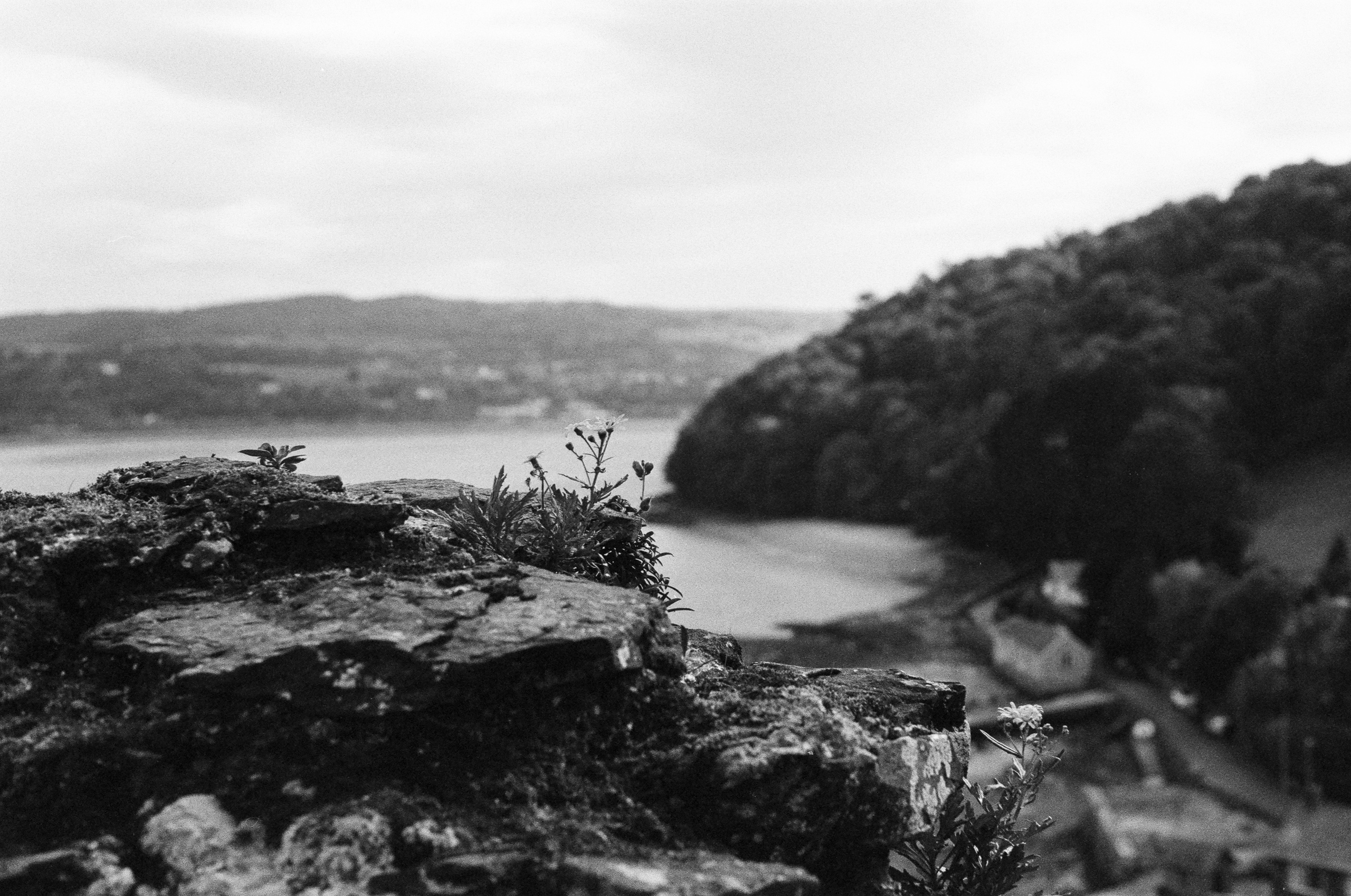
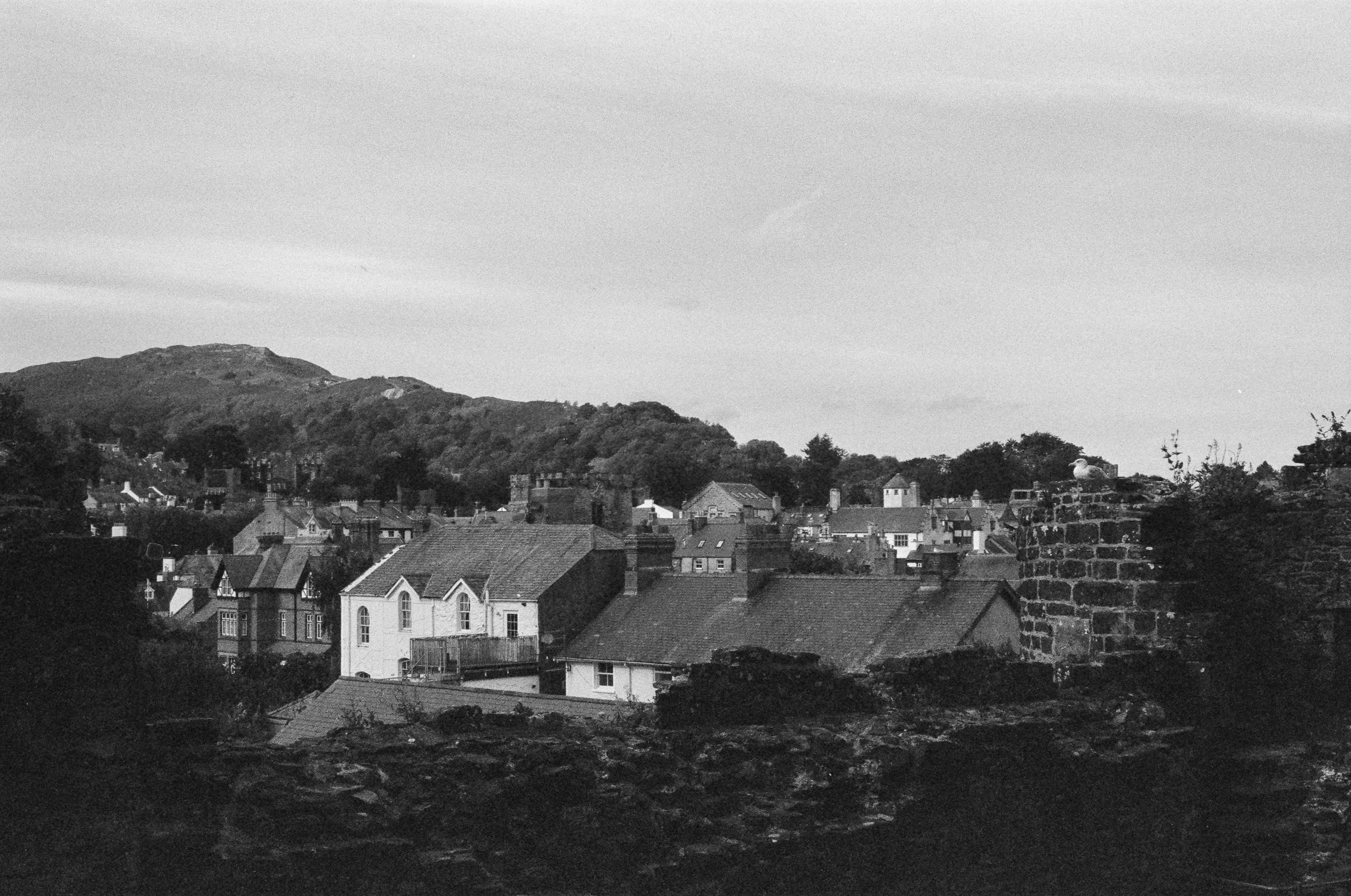
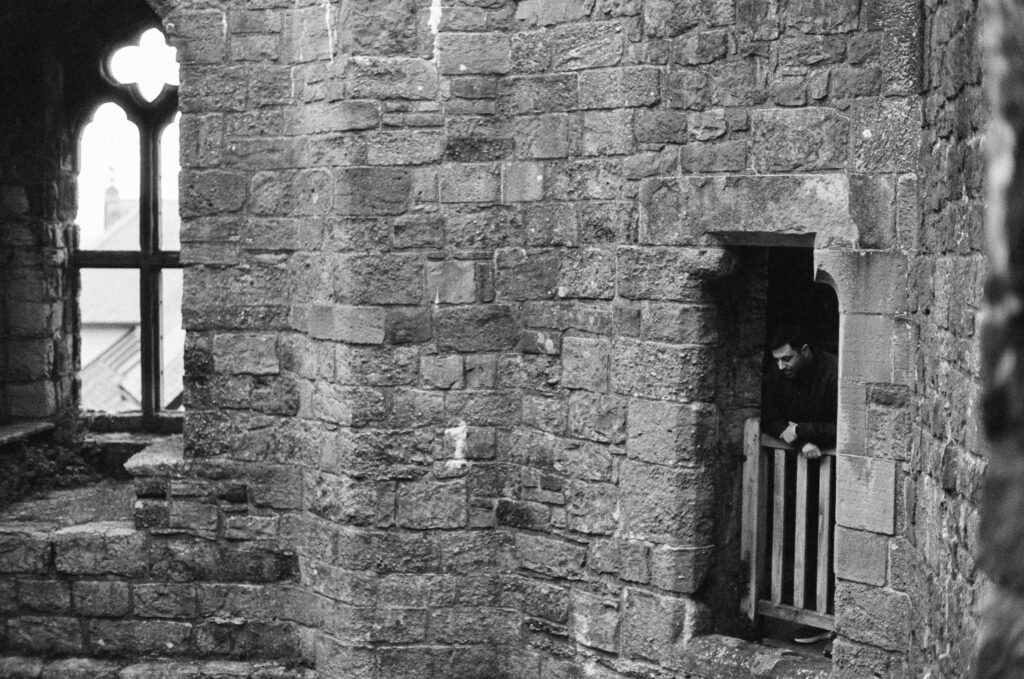
What I loved most about this castle, which is a bit more ruined than Caernarfon, wasn’t only the structure but the views of the town from its many vantage points. As I ducked my head and walked carefully through the low-ceilinged interiors, I kept noticing small window cutouts that framed the town naturally and beautifully.
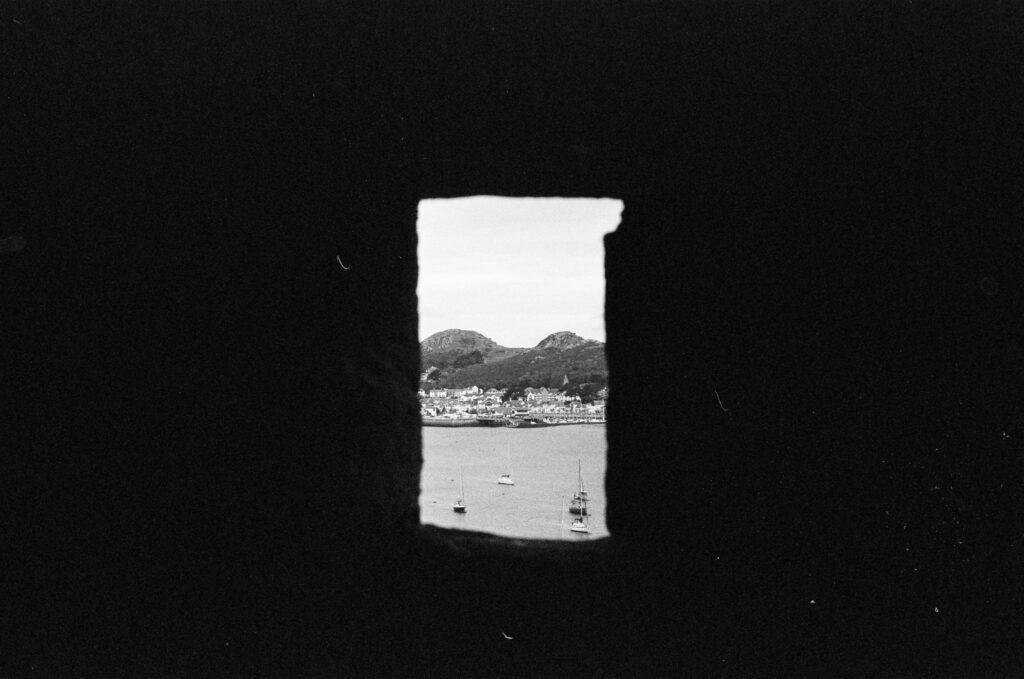
The image above shows a couple of technical things at play. When I pointed my camera straight at the window, the only light source in the frame, and a very bright one, sat in the center of my viewfinder. That matters because my camera, the Pentax KM, uses center-weighted metering: the meter reads the whole focusing screen but gives significantly more weight to the center of the frame. So the camera read a much brighter scene than the dim room I was standing in, and it set the exposure for the window. The result is a properly exposed view, with the landscape outside clearly visible. Straight out of the scan, this medium-contrast film rendered the interior walls gray, so I lowered the shadows in post to deepen the darkness around the window.
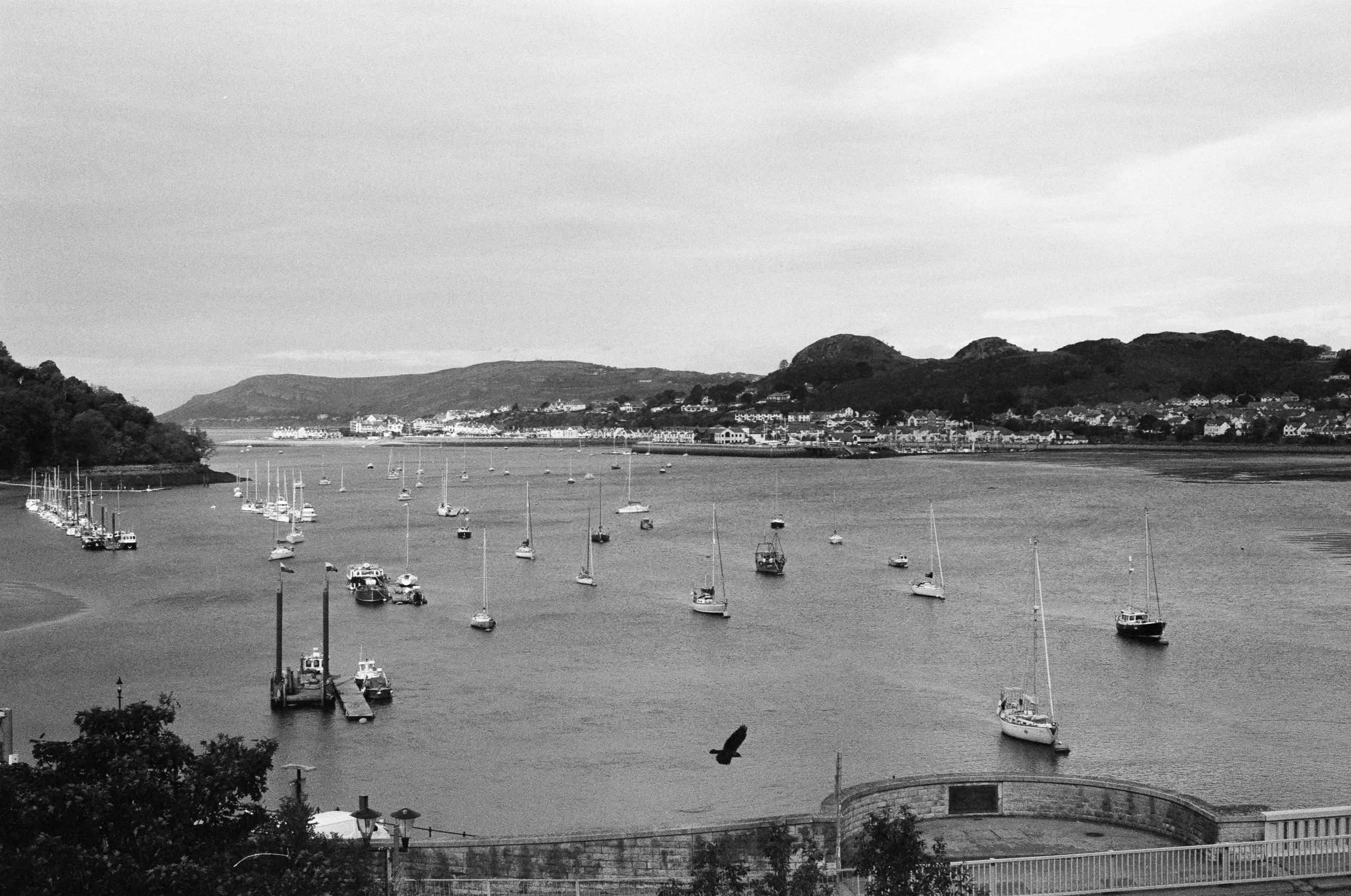
In general, I’d recommend overexposing this film stock by a touch. The common consensus among film shooters is that Mummy 400 is rebadged Fomapan 400 from the Czech maker Foma. FPP may have made slight changes of its own, but many people find Fomapan 400 behaves more like an ISO 200 film, so overexposing by about a stop usually gives you better shadow detail than shooting at box speed.
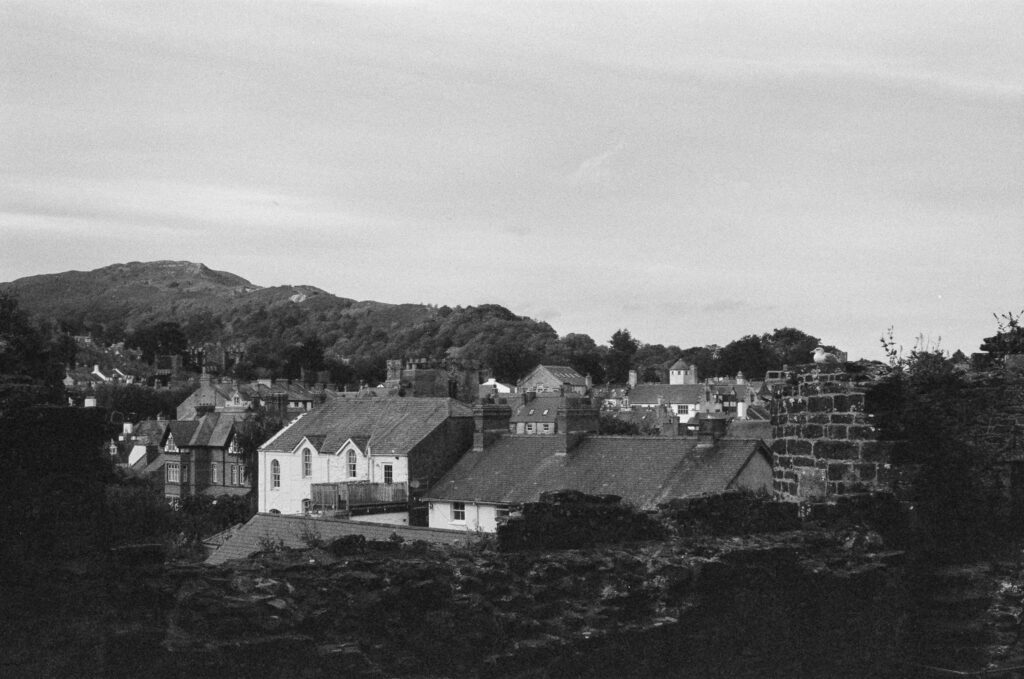
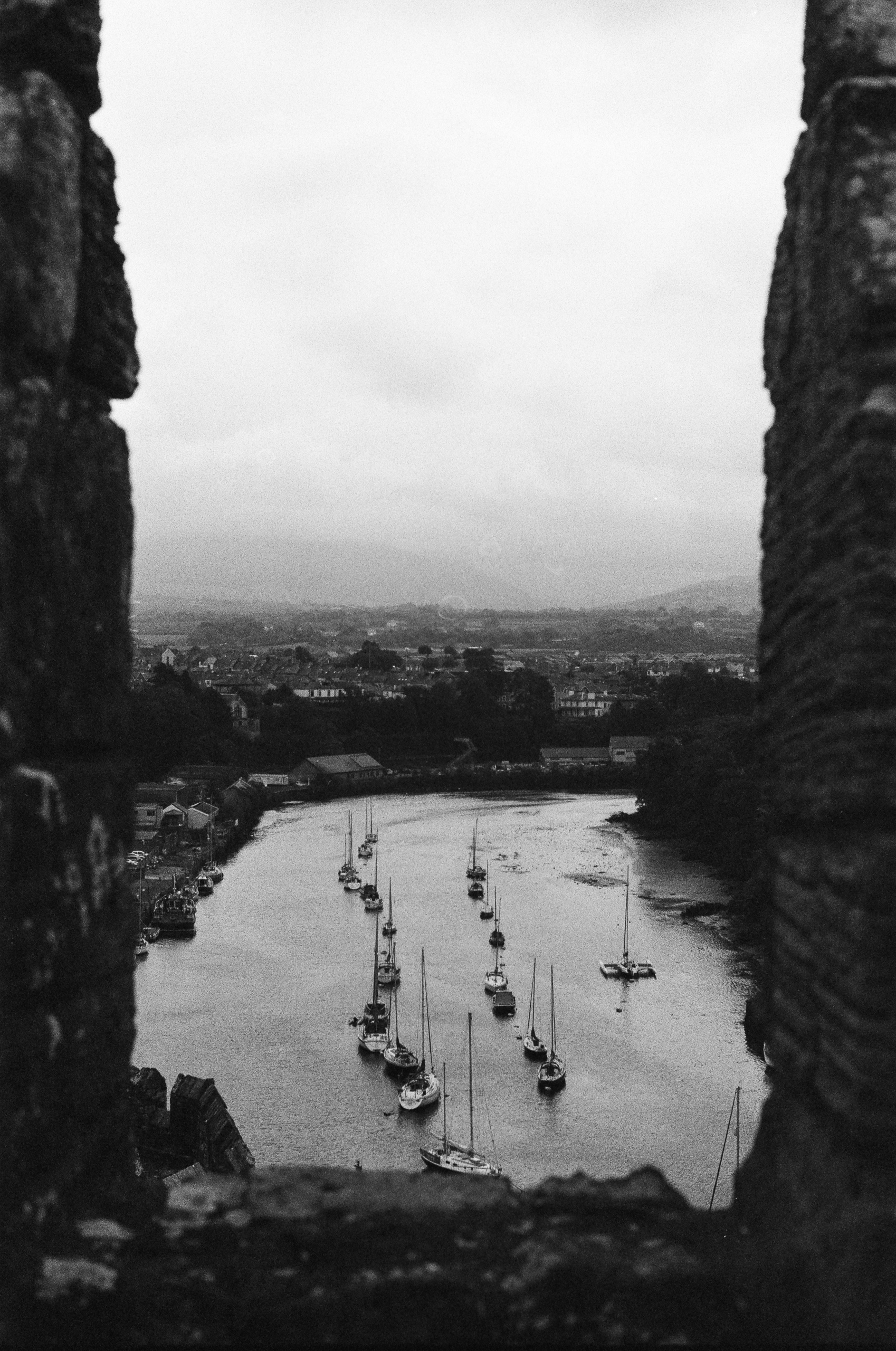
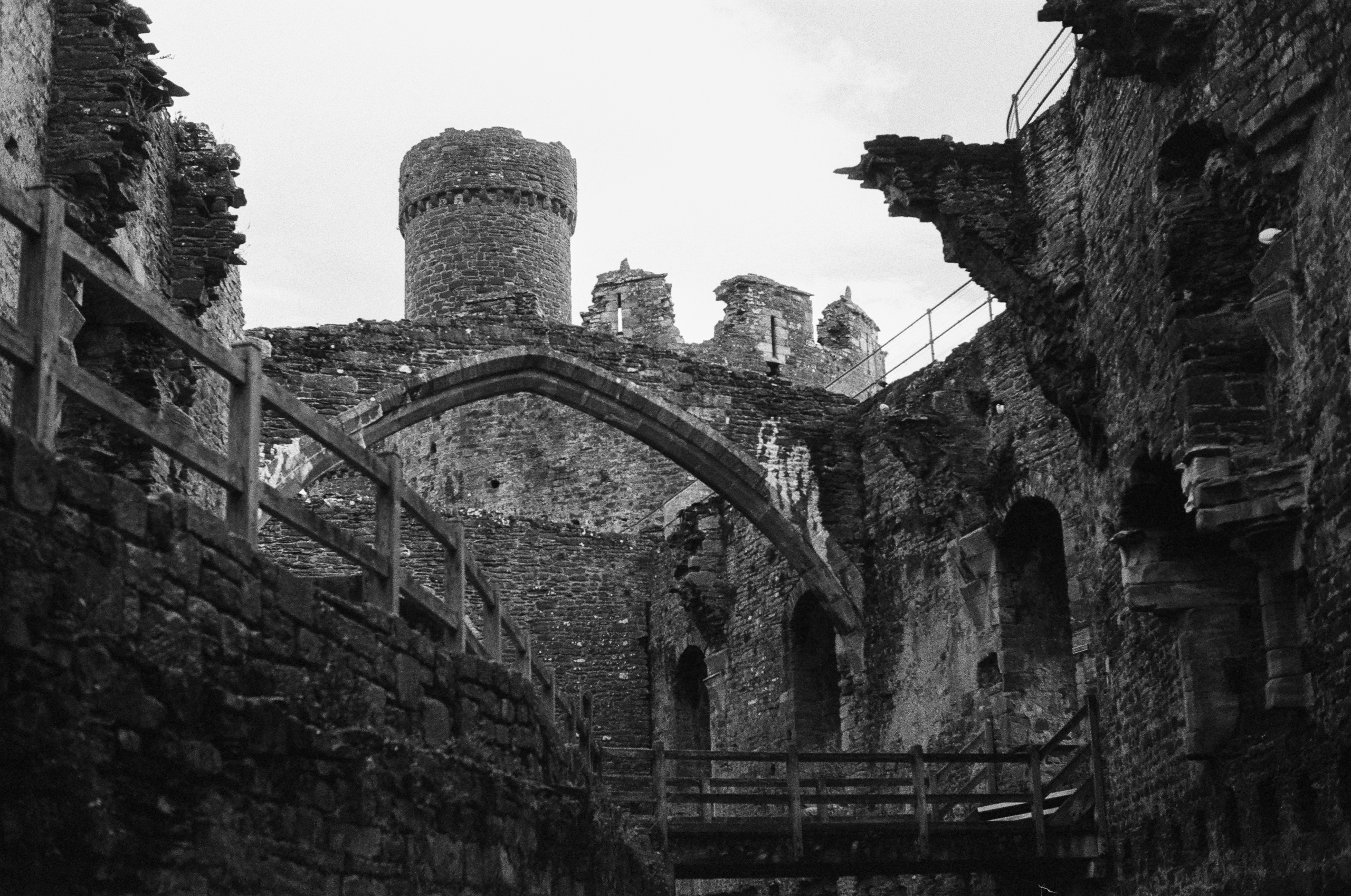
Take this picture of Conwy. It’s dark overall and would have benefited from an extra stop of light, especially since the bright overcast sky likely threw off my meter reading. Had I shot it as a 200 film, I would have pulled much more detail out of the shadows, in the castle edges and the town’s quaint architecture. What I love about this film, though, is that its soft, medium contrast turns an imperfect exposure into a moody, gothic scene rather than a muddy one.
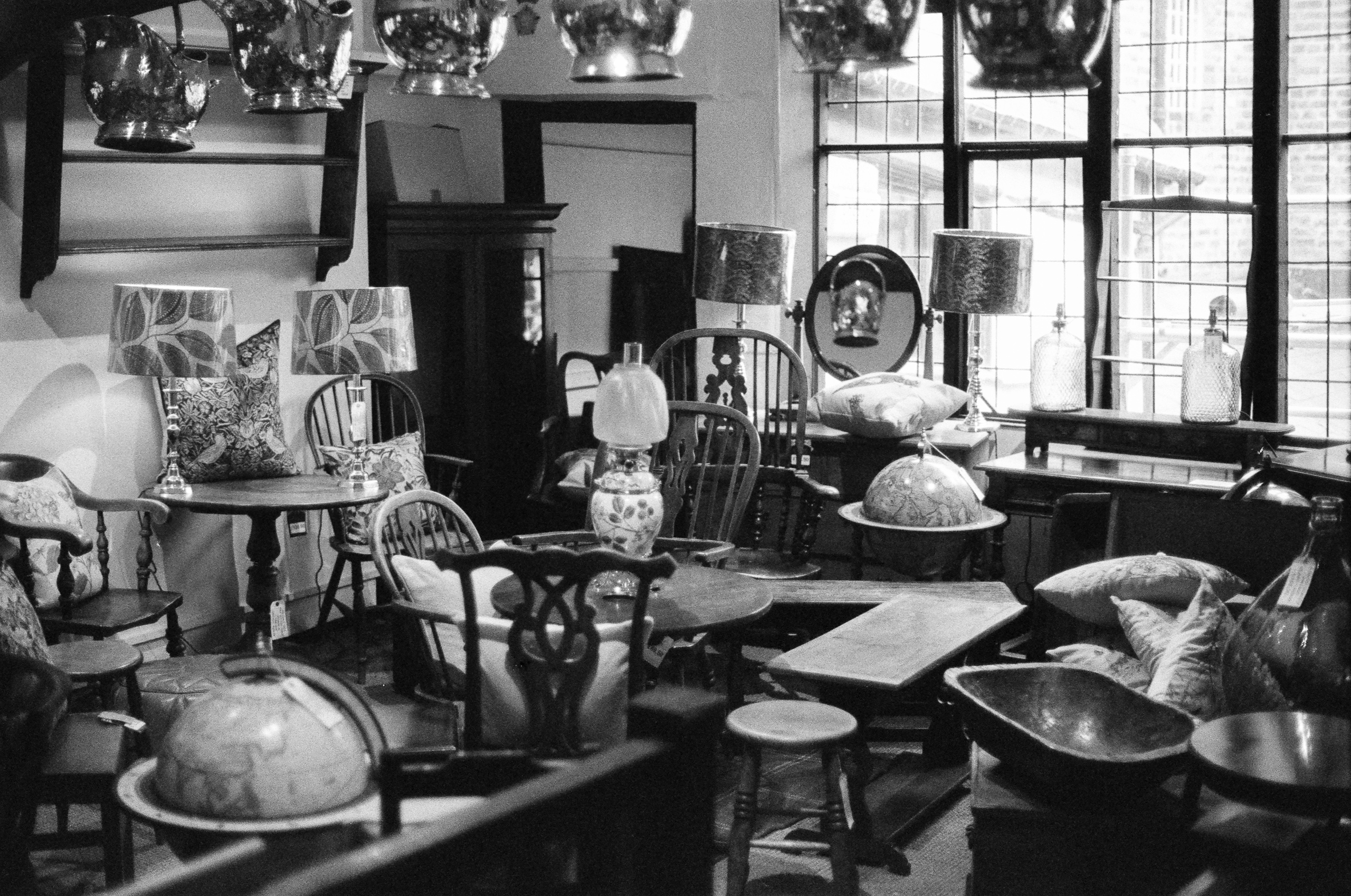
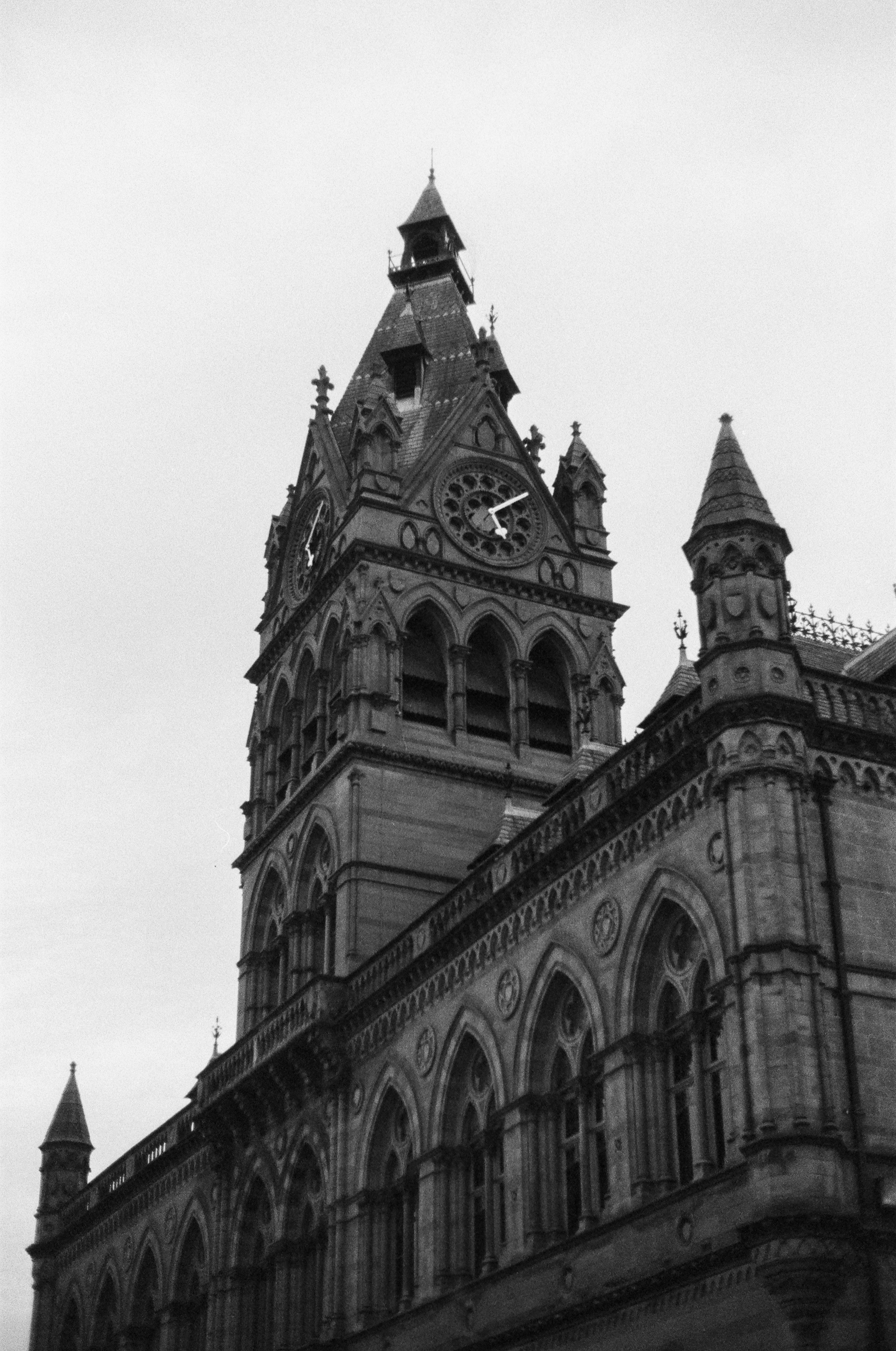
As the light began to fade, my colleague and I left the castle towns and made our way to Chester, in England, where we’d catch the train back down to London. We spent the late afternoon and early evening exploring an oddly touristy part of the city known as the Rows: distinctive two-tiered medieval shopping galleries with everything from beautiful antique stores to ordinary pharmacies to medieval souvenir shops.
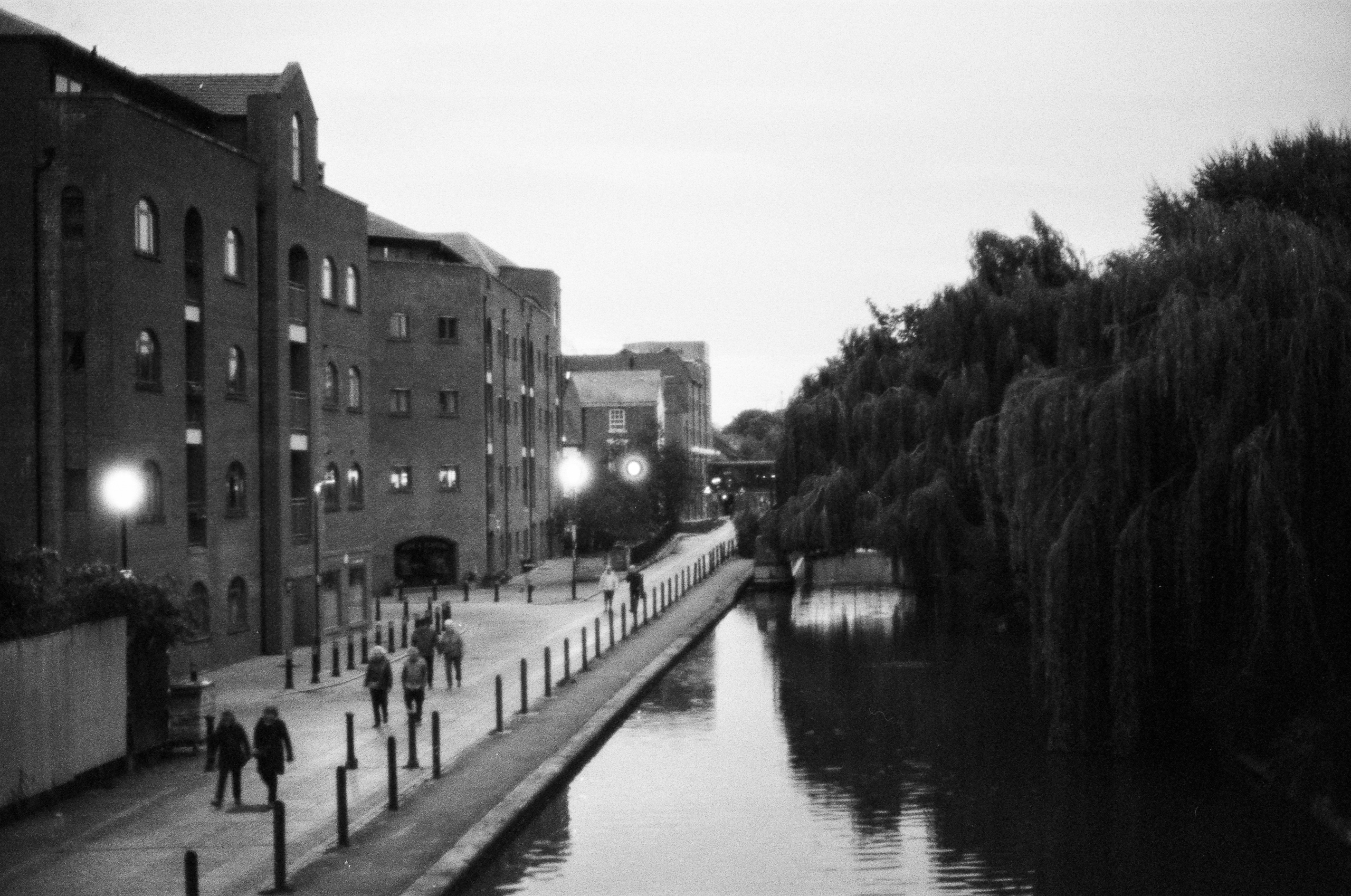
When we left the crowds and walked toward the train station, we quickly found ourselves deep in a residential neighborhood. Within minutes I was crossing a small bridge over the Shropshire Union Canal, beside a row of quaint apartment buildings, a world away from the bustle we’d just left. Locals walked slowly along the towpath, a little hunched against the cold as the sun went down on the fall evening. I had only one or two frames left after a long day of castles, and I decided to spend them on something completely different. That small choice gave me one of my favorite frames of the year.
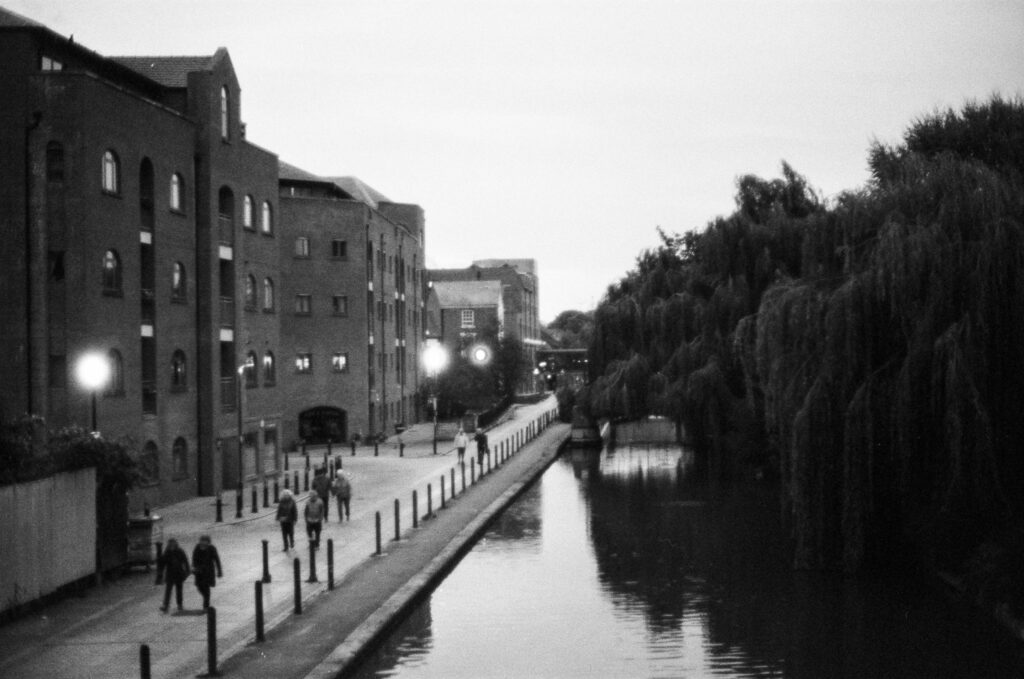
Dark, heavy foliage hangs low over the still canal and casts it in shadow, while four pairs of people walk along a plain path on a chilly evening in an English city. It captures exactly what I felt standing on that bridge: a quiet heaviness, with the trees looming over the water and the people beneath them small and hunched against the cold. I’ll never forget that moment, all because of a split-second decision to photograph an ordinary scene. It’s proof that a meaningful image can come from any combination of the “right” circumstances, and “right” is entirely subjective. Here, it meant the sun was setting and I was losing light fast. That forced a slower shutter speed, and because I was shooting handheld, the slower shutter added natural blur. The blur brought motion, heaviness, and a raw, dreamlike quality to the frame. Pair that with a medium-contrast, medium-grain film that suits street scenes and, in my experience, performs beautifully in low light, and everything came together in this one frame.
Overall, this film holds a special place in my heart. It marked a new chapter in my film photography: one where I paid as much attention to the film stock in my hands as to the place around me, and used that relationship to my artistic advantage. Bringing a Halloween-themed film to castles in Wales stirred my imagination, and it made me shoot with more intention. And the twist is that instead of hyper-stylized, spooky images, I came home with a soft, almost pastel-like black-and-white portfolio that tells a story of quiet meditation in ancient castles and charming old towns. That’s exactly what I experienced that day.
The next time I load Mummy 400, though, I’ll use it a little differently, now that I know the kind of images it makes. I’d like to shoot more portraits, probably a stop overexposed, in flat light and similarly interesting settings, like graveyards, abandoned ghost towns, or steel mills. This stock seems to suit places that carry real emotional weight, where the people in the frame feel almost like victims of the scene, much like those locals in Chester.
If this film stock interests you and you’d like to try it yourself, I recommend buying it here. You’ll be supporting the store where I buy all my film. The staff there inspire me every day to pursue my passion, and they share my excitement every time I pick up a new roll for a new trip.
Until next time!
Shot on Mummy 400 in North Wales